Why 2023 was an uncomfortable year for the West
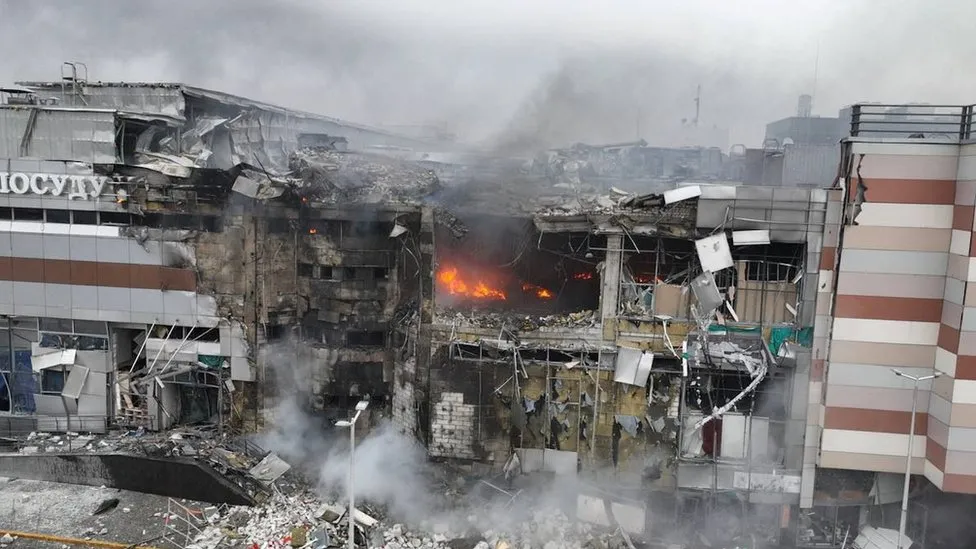
The past 12 months have seen a number of setbacks for the US, Europe and other major democracies on the international politics stage. None has been disastrous, for now. But they point to a shifting balance of power away from the US-dominated, Western values that have held sway for years.
On many fronts, the wind is blowing in the wrong direction for Western interests. Here’s why, and what benefits could still emerge from changes under way:
Ukraine
Despite some recent successes in the Black Sea, the war is not going well for Ukraine. That means, by extension, it is going badly for Nato and the EU, which have bankrolled Ukraine’s war effort and its economy to the tune of tens of billions of dollars.
This time last year, hopes were high in Nato that, supplied with modern military equipment and intensive training in Western countries, Ukraine’s army could press home the advantage it had gained that autumn and push the Russians out of much of the territory they had seized. That hasn’t happened.
The problem has been one of timing. Nato countries took a long time making their mind up about whether they dared send modern Main Battle Tanks like Britain’s Challenger 2 and Germany’s Leopard 2 to Ukraine, in case it provoked President Vladimir Putin into some sort of rash retaliation.
In the end, the West delivered the tanks, President Putin did nothing. But by the time they were ready to be deployed on the battlefield in June, Russian commanders had looked at the map and rightly guessed where Ukraine’s main effort was going to be.
Ukraine, they figured, would want to advance south through Zaporizhzhia oblast towards the Sea of Azov, driving a wedge through Russian lines, splitting them in two and cutting off Crimea.
The Russian army may have performed abysmally in its attempts to seize Kyiv in 2022, but where it excels is in defence. All that time that Ukrainian brigades were getting trained up in Britain and elsewhere during the first half of 2023, and while the tanks were being shipped eastwards to the front, Russia was building the biggest, most extensive lines of defensive fortifications in modern history.
Anti-tank mines, anti-personnel mines, bunkers, trenches, tank traps, drones and artillery have all combined to thwart Ukraine’s plans. Its much-vaunted counter-offensive has failed.
For Ukraine and the West, the metrics are nearly all going in the wrong direction. Ukraine is running critically short of ammunition and soldiers. Congress is holding up the White House’s attempts to push through a $60bn military support package. Hungary is holding up the EU’s €50bn aid package.
One or both may eventually get through, but that may be too late. Ukrainian forces are already having to switch to the defensive. Meanwhile, Moscow has put its economy on a war footing, devoting one-third of its national budget to defence while throwing thousands of men and thousands of artillery shells at Ukraine’s front lines.
Obviously this situation is deeply disappointing for Ukraine, which had hoped by now to have turned the tide of war in its favour. But why does it matter to the West?
It matters because President Putin, who personally ordered this invasion nearly two years ago, needs only to hold on to the territory he has seized (roughly 18% of Ukraine) to proclaim a victory.
Nato has emptied its armouries and committed everything short of going to war in order to support its ally, Ukraine. All potentially ending in an embarrassing failure to reverse the Russian invasion. Meanwhile, the Baltic states – Estonia, Latvia and Lithuania, all Nato members – are convinced that if Mr Putin can succeed in Ukraine, he will come for them within five years.
By BBC