
Ali Hassan Mwinyi: ‘Mr Permission’ – the man who opened up Tanzania
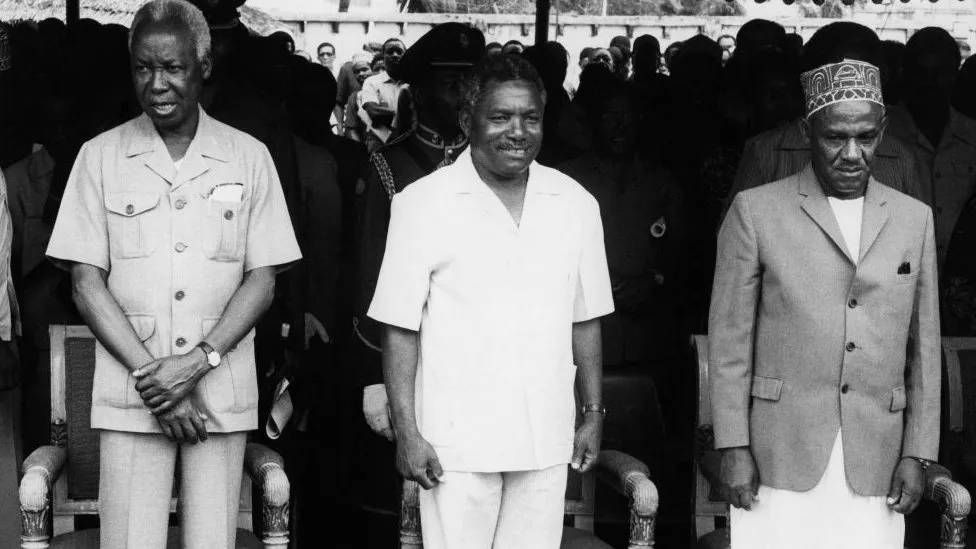
Ali Hassan Mwinyi, Tanzania’s second president, was fondly known as Mzee Rukhsa – “Mr Permission”.
The former leader, who died on Thursday at the age of 98, had a reputation for allowing a long list of things which had been denied by his predecessor – such as multiparty democracy, independent media, free trade and the private ownership of televisions.
In 1985, when he was first sworn in, Tanzania’s economy was struggling, reeling from the ruinous effects of founding President Julius Nyerere’s socialist policy known as ujamaa, as well as the war against neighbouring Uganda that toppled Idi Amin.
Ujamaa, Swahili for familyhood, involved collaborative working where everything was communally owned, including land, while people lived in communal settlements.
But after more than two decades under Nyerere, the country faced a shortage of essential goods including food and clothing. Foreign exchange was scarce and Tanzania was deep in debt.
Mwinyi had been hand-picked by the charismatic Nyerere. Despite the economic crisis, he was still respected in the country as the founding father. Nyerere’s vision had managed to unite the country made up of more than 120 ethnic groups.
His successor was seen as a shy, compromise candidate who was unlikely to rock the boat.
Some saw him as a puppet of Nyerere, who despite stepping down as president, stayed on as the leader of the ruling party, which still had a tight grip on the affairs of the state.
The Economist magazine is quoted as saying at the time that people should not “expect many changes in Tanzania’s lacklustre economy when [he] takes over as president… Mr Mwinyi is Mr Nyerere’s man”.
Nyerere himself had introduced Mwinyi as “a righteous man, impartial and respectful, [who] has never sought fame or used his position to advance his ambition”.
But he soon dismantled the ujamaa policy and many of the restrictions under his predecessor’s regime.
He opened up the economy, allowed other parties to run in elections, enabled independent media to exist and permitted the sale of televisions to individuals, which previously had only been communally owned.
He also began talks with the International Monetary Fund about getting financial support.
With the economy on the brink of collapse, the reforms were seen as having as saved the economy.
By BBC


