
US sets aside diplomatic rift with South Africa to invest in rare earths project
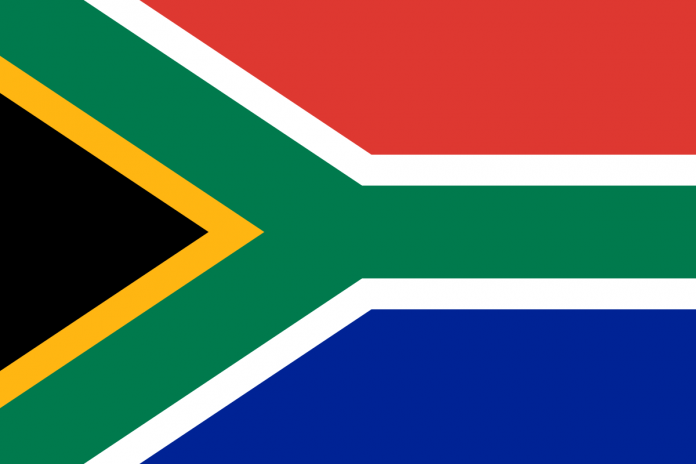
Donald Trump has had to put aside his hostility with South Africa, to get rare earth minerals from the site of a former chemical plant in northern Limpopo Province.
The United States has committed a $50 million investment in the project despite its relations with South Africa plummeting to their lowest point in decades.
These giant dunes may be waste from an old chemical processing plant, but they contain highly sought-after rare earth elements.
The Phalaborwa Rare Earths Project has US support through a $50 million equity investment by the US government’s International Development Finance Corporation (DFC).
It’s part of the country’s accelerated efforts to reduce its reliance on its economic rival China.
The minerals are crucial for making electronic devices, robotics, defence systems, electric vehicles and other high-tech products.
Countries have identified dozens of minerals, including copper, cobalt, lithium, and nickel as critical because they are essential for new technologies. The 17 rare earth elements are a subset of them.
The Trump administration is aiming to deploy nearly $12 billion to create its own strategic reserve.
“Advancing US strategic interests.”
The development finance was created during the first Trump administration and committed to the project during the Biden administration.
This is continuing despite the rift which ensued after Trump returned to office and issued an executive order last February to halt all financial assistance to South Africa.
The administration has shown economic concerns come first. The DFC has promoted its involvement in the Phalaborwa project as part of a push to unlock Africa’s mineral potential “while advancing US strategic interests.”
The Development Finance Corporation claims its involvement in the Phalaborwa project is part of a push to unlock Africa’s mineral potential “while advancing US strategic interests.”
The Phalaborwa project is being developed by Rainbow Rare Earths.
South Africa’s government does not have a direct stake in the project.
Rainbow Rare Earth’s Project Director Alberto Bruttomesso explains that rather than traditional mining, the company is extracting the heavy metals they want by effectively carrying out an environmental clean up.
“We are treating phosphogypsum and then extracting rare earths. That’s a first in the world. And that will be really good, I think a really nice thing for South Africa for us, because I mean that’s it’s us that did it. Not no one else the world that’s done this. It’s us.”
According to Bruttomesso the hard work’s already been done because the owners of the chemical plant have already carried out most of the processes by crushing the rock, milling it, and putting heat and energy into it to make the phosphogypsum, which is needed to make rare earths.
A 16-year project
Bruttomesso argues heating is the most expensive part of the process.
The Phalaborwa project aims to start extracting rare earths in 2028.
The dunes are 35 million tons of phosphogypsum, a byproduct of mining waste and the processing of phosphate rock for acid and fertiliser production.
Rainbow Rare Earths says the project is expected to operate for 16 years.
The US’s $50 million injection will be used only once Rainbow Rare Earths starts construction of its processing factory in Phalaborwa, anticipated in early 2027.
Rare earths are relatively common but usually occur at low concentrations and are difficult to separate, making their mining costly.
Benchmark Mineral Intelligence which is not associated with the development says because the Phalaborwa project is unique, with its experimental above-ground mineral extraction process, its potential remains unknown.
Rainbow Rare Earths says mineral extraction from the dunes will use up to 90% renewable energy and be significantly less expensive than typical rare-earth mining.
Roux Wildenboer the Senior Metallurgist for Rainbow Rare Earths describes the process.
“We’re treating industrial waste materials, any project similar to this is inevitably also an environmental clean up and that I think can’t be overstated is the fact that we are different to other projects in that a typical mine has a very has a very sensitive and and difficult tight rope to walk between providing something that the world needs but also not destroying the immediate environment of the mine,” he said.
“I think we’ve got the best of both worlds there because the rare earths that we’re going to produce is going to drive the green energy and green technology development,” he added.
Supplying defence systems
CEO George Bennett said Rainbow Rare Earths expects to predominantly supply the US and its defence systems: “We see America is very focused on is defence. So defence systems, weapon systems require rare earth elements to make them as sophisticated as they are.”
Bennett explained that F-35 fighter jets have 420 kilograms of rear earth per jet, while California class submarines have between four and five tons of rare earth per submarine.
“We are busy negotiating off take agreements. Which will be going towards the west, hopefully predominantly the US,” the CEO said.
Rainbow Rare Earths says it aims to supply the rare earth elements neodymium, praseodymium, dysprosium, terbium and others from its South African project.
They are used in high-performance magnets in wind turbines, electric vehicles, defence and emerging applications including robotics.
The Trump administration also has invested in critical mineral mining in the US and has pursued deals to secure access to these minerals abroad, including in Ukraine.
Greenland’s rare earths are part of the reason Trump has wanted to acquire the Arctic island.
The Phalaborwa project is one of several mineral projects in Africa with DFC investment.
In February, the US Trade and Development Agency signed a formal agreement to provide $1.8 million for a feasibility study at the Monte Muambe rare earths project in Mozambique which neighbours South Africa.
Dr Alseno Mosai from the University of Pretoria is a researcher specialising in the recovery of metals as well as geochemical modelling and acid mine drainage.
He said the rare earth extraction site in northern South Africa is rare in itself.
“In areas like Brazil, Russia, and so on, even in China, in order for them to get hold of the rare earth minerals, they have to dig deeper in order to get them from the walk. But this one, it’s already on the surface,” said Mosai.
“South Africa will actually be the second country with an efficient process like this for elements, second to China, of course,” the researcher added.
Referring to the Trump administration’s stance on South Africa Mosai said: “The US knows that they can gain a lot from South Africa which is why as much as they are fighting us, they also want us to be on their side.”
“They’re trying to punish us, but they know that they are doing that to get our attention and so on because they know South Africa has a lot of minerals when it comes to gold, platinum, gold metals and so on,” he added.
It’s not the only development the Trump administration is continuing on the continent of Africa.
The US is providing financial support for the Lobito Corridor, an initiative to build an 800-mile railway linking mineral-rich regions of Congo and Zambia to Africa’s Atlantic coast.
Perfectly positioned for export to the US.

