
Africa: New Data Reveals Scale of PEPFAR Disruptions as HIV Services Falter
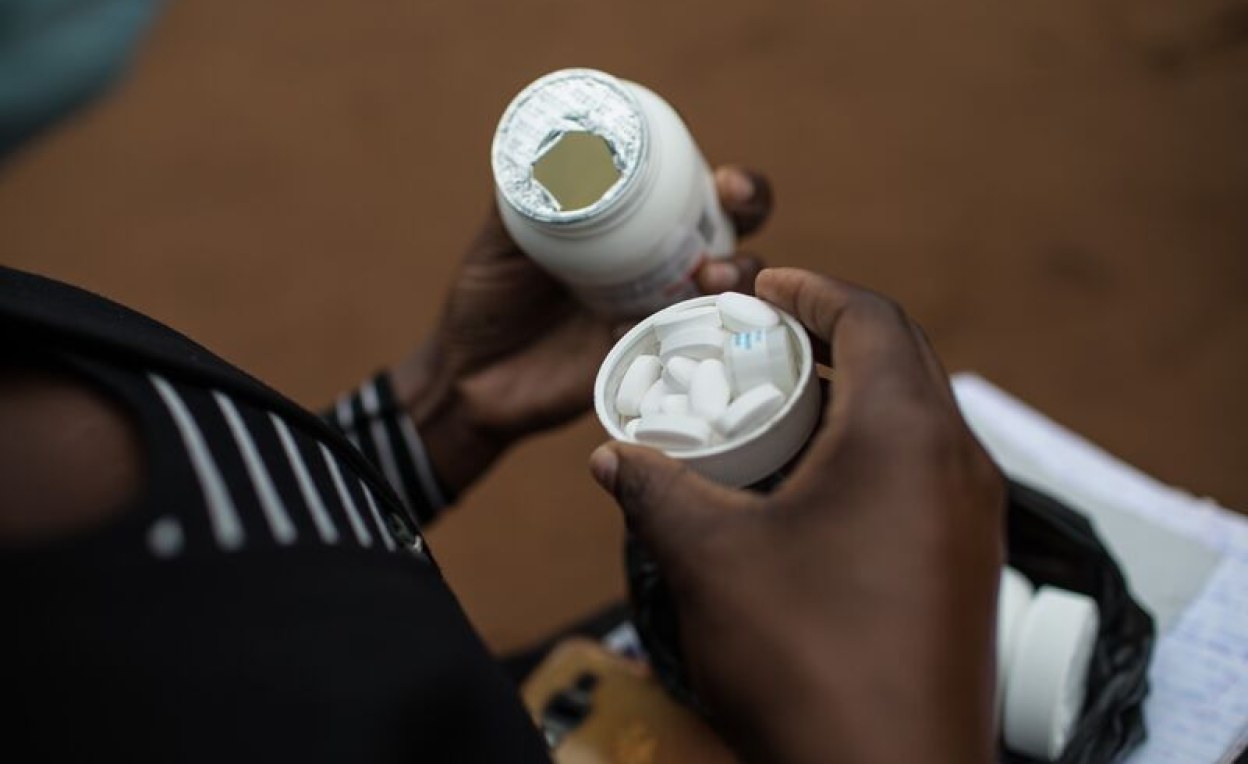
The first large-scale evidence from organisations implementing the U.S. President’s Emergency Plan for AIDS Relief (PEPFAR) suggests that recent funding and policy disruptions have triggered widespread interruptions to HIV services, with local organisations, children and key populations among those hardest hit.
For more than two decades, PEPFAR has been held up as one of the great success stories in global health, credited with saving more than 26 million lives since its launch in 2003. Two studies have provided some of the clearest real-world evidence to date of how changes to the world’s largest HIV programme are affecting service delivery across multiple countries. Researchers have said that the damage is more serious and more widespread than previously understood.
The PEPFAR Pulse Study found that PEPFAR has undergone a major shift since late 2025, with HIV treatment services largely preserved but prevention and community-based programmes scaled back in response to funding cuts and new policy requirements. The study was conducted by AmfAR’s Public Policy Office in collaboration with the Johns Hopkins Bloomberg School of Public Health, Funders Concerned About AIDS, and Data Etc. The findings suggest that the programme has not collapsed but has been fundamentally reshaped, with prevention and community-based HIV services bearing the brunt of the changes. In contrast, treatment programmes have largely remained intact.
Elise Lankiewicz of amfAR, the Foundation for AIDS Research in Washington D.C., said that the survey examined the experiences of organisations delivering PEPFAR-supported programmes between November 2025 and April 2026. Researchers surveyed 166 implementing partners across 46 countries.
“Implementing partners and their programming were hit from two directions,” Lankiewicz said. “Some awards were terminated while others were allowed to continue but still required to alter programming to align with the priorities of this U.S. administration.”
More than half of the organisations surveyed, 52%, reported losing at least one PEPFAR award, she said. Those funding terminations contributed to the closure of more than 1,700 clinics, drop-in centres and other HIV service delivery sites.
Termination wasn’t the only threat to programming. Most organizations that retained their funding were required to accept new conditions to keep it.
The impact was greatest among locally based organisations, which were significantly more likely than international partners to lose funding and close service delivery sites. Even organisations that retained funding often had to comply with new restrictions to continue receiving support.
“The PEPFAR that survived is not necessarily the PEPFAR that existed before,” said Lankiewicz.
She said 77% of implementing partners reported having to comply with new U.S. policy restrictions as a condition of continued funding. These included limiting programmes to designated life-saving activities, complying with restrictions related to diversity, equity and inclusion (DEI) and gender, and reducing or ending services for populations most vulnerable to HIV.
These conditions altered programming even at organizations whose funding was never touched. According to the study, these policy changes altered programmes even when funding remained intact.
Among partners with no canceled awards, the survey found that services for key populations were the most commonly dropped, cited by 64% of respondents. She said that many organisations also changed the language used in grant applications and programme documents, removing terms such as “gender” and “key populations” to comply with the new funding conditions.
Treatment held steady, prevention took the hit
The study’s clearest pattern, Lankiewicz said, was that core HIV treatment services were largely protected, while the surrounding services that support and sustain treatment were hit hard. Among organisations providing HIV prevention services, 43% permanently discontinued at least one prevention activity, with condom distribution and pre-exposure prophylaxis (PrEP) programmes among the hardest hit.
Community-based services fared no better. More than 80% of partners who had previously offered outreach, adherence support, or peer-network services reported disruptions across every community-service category the survey tracked.
“Treatment was largely protected while prevention and the services that reach people at highest risk were cut most deeply,” said Lankiewicz.
Lankiewicz cautioned that PEPFAR is only one piece of the global HIV response, and that other governments and donors will likely absorb some of what was lost. But she said that absorption is unlikely to be uneven. Community-based programmes and services for key populations, she said, are the least likely to be replaced because many governments have historically been unwilling or unable to fund them.
“Our findings document not a collapse, but a narrowing of PEPFAR services concentrated among the populations and programming that in the long term often decide whether epidemic control is won or lost,” she said.
Greg Millett, Director of amfAR’s Public Policy Office and a member of the International AIDS Society (IAS) Governing Council, said the findings move the conversation beyond projections.
“Until now, much of the discussion about the impact of recent PEPFAR disruptions has relied on projections and modelling,” Millett said. “This study provides some of the first real-world data from implementing partners on what is actually happening on the ground.”
PEPFAR, launched in 2003, has been credited with saving more than 26 million lives and dramatically expanding access to HIV prevention and treatment worldwide. However, Millett said, the programme has undergone significant disruption since the beginning of the second Trump administration, prompting researchers to conduct what they describe as the first large-scale global survey of PEPFAR implementing partners.
The results paint a troubling picture.
More than half of surveyed partners reported having at least one terminated award, and more than 80% said they had been asked to restrict their work in order to comply with an additional U.S. policy requirement. Those funding terminations resulted in the closure of more than 1,700 HIV service sites.
The burden fell unevenly. The impact fell disproportionately on locally based organisations, which were more likely to permanently stop services for “key populations,” the groups at greatest risk of HIV, including sex workers, men who have sex with men, and people who inject drugs. Among partners delivering HIV treatment, more than one in five said they had permanently discontinued at least one clinical service. Many also reported shortages of essential commodities, including laboratory supplies, condoms, pre-exposure prophylaxis (PrEP) and antiretroviral medicines.
He said the findings demonstrate that recent U.S. funding and policy changes have caused disruptions across the PEPFAR programme, with the greatest burden falling on local organisations and populations already facing the highest HIV risk.
The survey findings align with a recent analysis by amfAR and the IAS using PEPFAR’s own programme data.
That analysis documented a 24% decline in frontline health workers, reductions of between 13% and 30% in HIV diagnoses, and what Millett described as “a complete collapse” of HIV prevention programmes and services targeting key populations between 2025 and 2026.
“Together, these data from PEPFAR implementing partners, as well as data from the U.S. government, confirm that these disruptions threaten to reverse progress toward controlling the HIV epidemic,” he said.
Millett called for sustainable solutions to protect HIV services globally, including greater support for locally led organisations and programmes designed by and for key populations.
Sharp decline in children receiving treatment
A second study focused on the programme’s impact on children living with HIV.
This finding necessitates an urgent country-level investigation and the restoration of public dissemination of age-disaggregated PEPFAR data, said Ramona Godbole of Heidelberg Institute of Global Health, Heidelberg University Hospital, and the Clinton Health Access Initiative.
The study was led by Professor Kenneth Ngure’s research team and examined a separate but related question: what has happened to children on PEPFAR-supported HIV treatment. The analysis examined newly released PEPFAR data for the 2025 fiscal year to determine whether recent declines in paediatric HIV treatment reflected long-term trends or represented a significant departure.
The U.S. State Department has characterized recent declines in paediatric treatment numbers as consistent with the kind of dip that typically follows any year of program disruption, in other words, a routine fluctuation rather than a structural failure. The research team set out to test that claim using newly released PEPFAR data for fiscal year 2025, restricting their analysis specifically to PEPFAR-supported site-level service delivery and technical assistance to ensure an accurate comparison.
“We looked at 21 countries with substantial pediatric caseloads. Twenty of the 21 showed declines, and in every single one the decline in support for children on treatment was steeper than the decline observed among adults,” said Godbole.
She said South Africa recorded the largest absolute decline, with nearly 31,000 fewer children receiving treatment through PEPFAR-supported sites. Zimbabwe and Kenya each reported declines of more than 6,000 children, while South Africa and India experienced percentage declines exceeding 40%.
Godbole said that a decline in children receiving treatment through PEPFAR-supported programmes does not automatically indicate worsening HIV outcomes.
“Now, a decline in PEPFAR-supported pediatric treatment isn’t inherently bad news. It usually means fewer babies are being born with HIV because our prevention of mother-to-child transmission efforts have worked,” she said.
South Africa experienced the largest absolute decline. According to the study, more than 30,000 fewer children received PEPFAR-supported treatment in the country, representing a 45% drop. Further analysis singled out five countries, Uganda, Haiti, Zambia, South Africa, and Kenya, where the declines appear to break from historical trends, contradicting the State Department’s characterization of the trend as routine.
“These are signals, not a verdict,” said Ngure. “But children cannot wait.”
He called for urgent country-level investigations and a return to routine publication of age-disaggregated PEPFAR data to better understand what is happening.
While the analysis could not determine the treatment status of individual children or measure national treatment coverage, Godbole said the findings raised questions about claims that the programme had remained stable despite funding disruptions.
“Our country-level results do challenge broad assertions of program stability,” she said. “These results and their limitations are exactly why we need urgent, on-the-ground follow-up to make sure that children aren’t falling out of care.”
She also called for greater transparency, urging PEPFAR to resume publishing regular age-disaggregated data to enable researchers to monitor whether the declines continue or stabilise.
“And finally, we need PEPFAR to resume regular public age-disaggregated data releases so we can tell whether declines have continued or stabilized,” said Godbole.
Warning for the global HIV response
Taken together, Millett said, the two studies deliver “a high-level warning” about the fragile state of the global HIV response.
“PEPFAR is one of the greatest stories in the history of global health,” he said. “But the infrastructure we have built over more than two decades is eroding rapidly, with serious consequences for the most vulnerable populations, including children.”
He also warned that political support for the programme in the United States has weakened over time.
When researchers previously examined the membership of the U.S. Congress, they found that only 11% of lawmakers remained from the group that authorised PEPFAR in 2003. Today, he said, even fewer of those original champions remain in office.
“We must continue to develop champions for our global health programme,” said Millett.