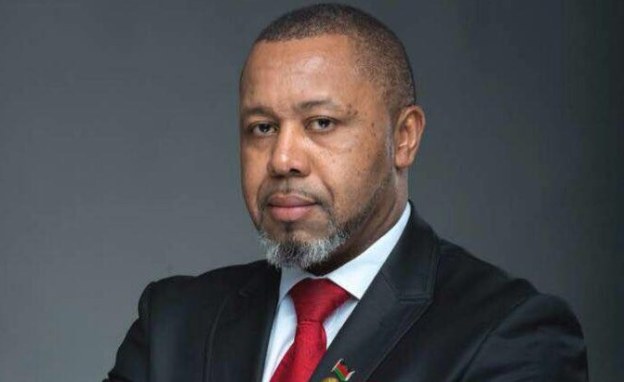
The parliamentary inquiry into the June 10, 2024 plane crash that killed Vice-President Saulos Chilima and eight others has heard troubling testimony suggesting Malawi’s aviation infrastructure suffers from long-standing structural deficiencies — raising uncomfortable questions about institutional readiness that extend well beyond the immediate circumstances of the crash itself.
Fredrick Chisepeya, director of Aerodromes and Air Navigation Standards at the Civil Aviation Authority of Malawi (CAAM), told Parliament’s Ad-hoc Committee investigating the disaster that the country risks failing next year’s International Civil Aviation Organisation (ICAO) audit unless significant investment is urgently directed towards safety and security infrastructure.
His testimony painted a picture of a system operating with minimal redundancy: Malawi possesses just one secondary flight surveillance radar, situated at Kamuzu International Airport in Lilongwe, whose effective coverage diminishes substantially for aircraft flying at lower altitudes.
It was this gap, Chisepeya confirmed, that meant the Malawi Defence Force aircraft was outside radar coverage entirely when it crashed in Viphya Plantation.
“The limitation is the radar coverage. When you are up, the range is wider and when you are down the range is narrower. So that makes the aircraft sometimes not to be seen,” he told the committee — an admission that speaks to a broader question of how a nation manages the tension between resource constraints and the non-negotiable demands of aviation safety.
The inquiry also heard that Mzuzu Airport, the aircraft’s intended destination, fell well short of the protection standards required for medium-sized aircraft such as the Malawi Airlines Bombardier involved in the crash.
Using CAAM’s own ten-point protection scale, Chisepeya estimated the airport’s actual safety level at around three, against a required standard of six. He further noted deficiencies in fire response capacity and runway conditions, describing the surface as bumpy and substandard.
Perhaps most striking was the revelation that Mzuzu Airport was operating without a valid licence at the time of the crash, having only been licensed the following year, in 2025 — and even then, with conditions attached.
Questions from committee chairperson Walter Nyamilandu drew a candid admission from Chisepeya that enforcement of aviation standards across Malawi’s airports remains inconsistent.
The committee’s scrutiny extended into the operational detail of the flight itself. Lilongwe Mude MP Mphatso Boti (Malawi Congress Party) probed whether formal aviation codes exist for reporting interference incidents, prompting Chisepeya to acknowledge that communication with aircraft becomes markedly more difficult once outside radar range.
Mwanza Central MP Felix Njawala (UTM Party) went further still, raising the possibility of frequency interference between the aircraft and ground officials — noting that the pilot is understood to have made contact with Mzuzu Airport officer-in-charge Joseph Moyo only once throughout the flight.
Taken together, the testimony suggests the Chikangawa crash may prove less an isolated tragedy than a symptom of deeper, systemic underinvestment in the infrastructure meant to keep Malawi’s skies safe.
By Nyasa Times.