Ethiopia: Who Gets to Author Ethiopia’s Political Order? Why the Crisis Is About More Than Identity Politics
Addis Abeba — A familiar explanation of Ethiopia’s recurring crises starts with identity: politics organized around nationality can harden boundaries, reward exclusionary mobilization, and expose minorities, migrants, mixed communities, and dissenters to exclusion when democratic protections are weak. International Crisis Group and other scholars have long raised these concerns.
But that explanation begins too late and risks reversing causality. For many historically subordinated peoples, collective mobilization grew from conquest-based incorporation, land confiscation, cultural and linguistic exclusion, displacement of Indigenous institutions, and rule from above. Collective national claims are therefore not the original disturbance in an otherwise neutral state; they are responses to an older political order whose terms were never jointly authored.
The thesis here is that Ethiopia’s crisis is better understood as an unresolved foundational bargain: the basic settlement that determines membership, territory, land and resources, authority, and protection. Political authorship asks whether peoples and citizens merely live under rules made elsewhere or have meaningful power to shape, contest, and revise the political order. The distinction is between being governed as a population and participating as a co-author of the polity.
This framing also puts the state inside the analysis. State institutions have helped organize political categories, privilege some histories and languages, allocate land, define territory, and determine which claims counted as national. The disagreement is therefore not only over identity but also over how the state was made and whose authority, history, and institutions were built into it.
This is an interpretive historical argument based on scholarship, Oromo historiography, constitutional texts, human-rights documentation, and institutional reports rather than new field data. It does not claim that history mechanically causes present conflict: leaders, parties, movements, security institutions, regional authorities, local actors, media, and diaspora groups make contingent choices. The standpoint is Oromo-centered but not Oromo-exclusive. Nor does the framework romanticize any actor: all political projects remain accountable for civilian protection and basic rights. Here, “the center” means historically dominant institutions, narratives, and governing coalitions, not northern Ethiopians as a population or everyone who values Ethiopian unity.
Historical bargain that was never fully settled
Ethiopia’s state formation is deeply contested. State-centered narratives often describe late nineteenth-century expansion as national unification; Oromo-centered and other critical histories describe much of the same process as conquest and incorporation into an imperial order. These rival accounts matter because they produce different answers about who built the state, who was incorporated into it, and on what terms.
Ethiopia’s crisis is an unfinished argument about political membership.” Discover moreBusiness news analysisRead Travel GuidesBook Local ToursPoliticsBreaking news alertsInternational relations analysiscourtDaily news updates
For many Oromo and other peoples incorporated from the south and east, the problem was not simply unequal citizenship. They were incorporated as subjects of administration rather than as equal citizens and co-authors. Expansion reordered landholding, labor, tribute, taxation, and political authority; studies of Ethiopia’s frontiers connect territorial expansion to extraction and administrative hierarchy. Oromo-centered scholarship likewise treats incorporation as a political-economic rupture that displaced locally grounded authority and made land a continuing site of contestation.
Political incorporation also displaced Indigenous institutions. Asmarom Legesse documents Gadaa as an internally generated political order with deliberative assemblies, rotating leadership, checks on power, and public accountability. Its marginalization was therefore a loss of recognized political authority, not merely cultural loss. This condition–incorporation without equal standing as a constituent author–is what I mean by subjecthood. It echoes Mahmood Mamdani’s citizen/subject distinction: formal inclusion in a state can coexist with administrative rule rather than equal political rights.
Oromo political thought adds a normative layer. Safuu names the foundational order, Seera Waaqaa, to which Gadaa, as human law, Seera Namaa, is answerable. Cubbuu marks rupture through domination, dispossession, exclusion, or other violations of legitimate relationship; Nagaa names the order toward which repair is directed. Displacing Gadaa therefore displaced not merely an institution but an internally grounded conception of legitimate authority.
Land and language made this hierarchy material. Land links livelihood, identity, development, and political authority; official language shapes access to schools, courts, public employment, administration, and public memory. When a people’s land, language, institutions, and history are subordinated, citizenship may be formally universal while remaining politically hierarchical. That is asymmetric political authorship: some groups helped define the state’s institutions, official language, national narrative, and claims to legitimacy, while others were governed largely through institutions they did not author.
The 1974 revolution abolished the monarchy, nationalized land, and proclaimed equality, but the Derg remained centralized and militarized. It acknowledged the nationalities question without creating a democratic process through which constituent peoples could negotiate political association, while wars, forced recruitment, displacement, famine governance, and militarized administration deepened distrust. Equality declared from the center could not substitute for meaningful authority over land, language, and local governance.
Why nation-based federalism emerged
Seen against that history, the post-1991 federal system looks different. For many Oromo, Somali, Sidama, Wolaita, Anuak, and other nations, nationalities, and peoples, centralized statehood had meant land loss, language suppression, displacement of Indigenous institutions, weak local authority, or coercive administration. Collective claims were not invented by federalism; they were produced by the earlier denial of collective political existence. Nation-based federalism promised recognition as constituent peoples, authority over territory, self-government, language and cultural protection, and safeguards against renewed assimilation. The 1995 Constitution made those commitments explicit.
The system produced real gains in local-language administration, education, formal recognition, and regional status. It can also reproduce domination where minorities, migrants, mixed communities, or dissenters lack enforceable protections. David Turton and Jon Abbink have identified both sides of the problem: federal recognition can harden exclusion when democracy is weak, while centralized alternatives are not historically neutral. Those risks argue for deeper rights protections, not abolition of collective recognition. Nation-based federalism recognized a real problem, but it did not settle it.
Recognition without dependable power
The post-1991 order developed a central contradiction: peoples were recognized as constitutional subjects while the dominant-party system often limited their capacity to act as political subjects. This is promissory recognition: rights are named, but institutions needed to make them dependable remain weak. Courts, electoral bodies, local administrations, and security institutions often lacked independence, while land administration, infrastructure, revenue flows, credit, investment, and development corridors could be shaped through central ministries, ruling-party networks, and national strategies. Regional states could thus possess constitutional status without enough fiscal and institutional leverage to convert it into material authority.
The post-2018 period makes the distinction between representation and authorship especially clear. The rise of an Oromo prime minister was historically significant, but representation at the federal apex is not political authorship for Oromia as a constituent polity. Article 49(5) recognizes Oromia’s special interest in Finfinnee/Addis Ababa, yet the implementing framework that would make that right operative remains deferred; constitutional commentary has described this as recognition without exercise. A right can be named while the power relationship that made it necessary remains intact.
The distinction is between being governed as a population and participating as a co-author of the polity.”
The transition from the EPRDF to the Prosperity Party matters for the same reason. The EPRDF was authoritarian and party-managed but formally retained a coalition organized through regional ruling parties. The Prosperity Party absorbed most member and allied parties into a single national ruling party, narrowing already limited arenas in which regional parties could bargain upward as representatives of constituent units.
Oromo politics is not unified: it includes ruling-party actors, opposition organizations, armed actors, local communities, civic networks, and a large diaspora. That plurality does not negate political authorship; it makes protected institutional channels more important. When disputes are managed mainly through emergency, command-post, or military structures, claims over land, representation, and authority are converted into security problems, and residents encounter the state more as an apparatus of containment than a forum for constitutional authorship.
Why Oromia is central to the bargain
Oromia is not simply one regional example. It is Ethiopia’s largest regional state; Finfinnee/Addis Ababa is situated within it; it contains major agricultural and urbanizing zones; and it has been central to state formation and mass protest. Oromia is therefore a central site where the legitimacy of the Ethiopian state is continually produced, contested, and tested. Oromo-centered scholarship shows why: Oromo claims concern not peripheral cultural accommodation after the state was formed, but the terms on which a major constituent people was incorporated and the authority it holds within the state today.
The political vocabulary of Oromo claims reinforces this point. Scholarship on Oromummaa links Oromo collective identity to shared historical experience, Afaan Oromo, and struggles against domination. Oromo nationalism is therefore not reducible to reactive identity mobilization; it carries a claim that political authority should be accountable to a people whose institutions, histories, and political standing were subordinated. Likewise, the vocabulary of conquest, colonialism, and imperial domination identifies a real analytical tension: a state celebrated for anti-colonial sovereignty can still contain hierarchies of internal incorporation.
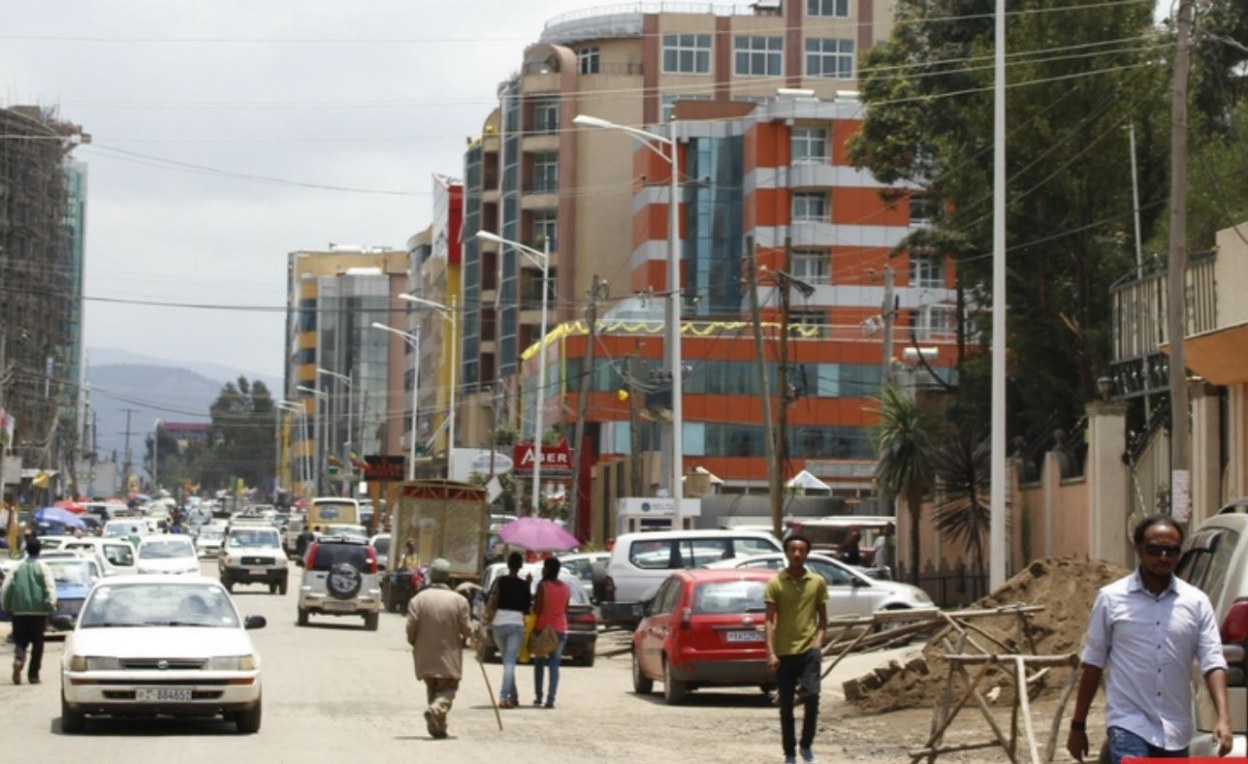
The Finfinnee/Addis Ababa question condenses the wider problem. The city is a diverse federal capital and diplomatic hub, but it is also situated within Oromia and embedded in Oromo land and historical memory. Getahun Benti framed the dilemma as a “nation without a city.” The dispute concerns not a self-contained city versus communities outside it, but a capital located within Oromia, Oromia’s constitutionally recognized special interest, broader Oromo territorial claims, and authority over metropolitan expansion, land conversion, compensation, cultural recognition, revenue, and representation.
Expansion also raises distributive questions: who loses land, who is compensated, who captures the value created after conversion to urban use, and whose historical presence is recognized. Debelo and Soboka place the city’s foundation and horizontal expansion within a longer frontier-making process that displaced Oromo farmers as part of state-building; Regassa and Emmenegger show how monuments, names, and the built environment materialize competing claims about national history and who authored the state. Land, planning, memory, and political authority are intertwined.
The 2014-2016 Oromo protests showed how land, representation, youth precarity, and security could converge. Mobilization around the Addis Ababa/Oromia expansion controversy reflected fears that development centered on the capital would reproduce older patterns of land alienation and political exclusion. Human Rights Watch documented killings, mass arrests, and other serious abuses. Qeerroo networks helped turn localized grievances into a broader challenge to the political order. History did not mechanically produce the protests: activists mobilized, and officials made choices. But blocked futures through unemployment, uneven development, land scarcity, urban expansion, and dispossession gave those choices their structural setting, while securitization helped turn grievance into a wider crisis of legitimacy.
The analytic value of Oromia therefore extends beyond Oromia. The center-periphery question is also epistemic: whose history counts as national history, whose political vocabulary is legitimate, and whose insecurity is treated as a national problem rather than a local disturbance. What appears as fragmentation from the center may appear as unfinished emancipation from the periphery. Oromia is thus one of the principal sites through which the legitimacy of the Ethiopian state itself can be examined.
Oromia is central, but the bargain reaches beyond it
The same problem appears elsewhere. In the Somali region, Human Rights Watch documented counterinsurgency abuses, which it characterized as war crimes and crimes against humanity, and later documented torture in Jail Ogaden. In Gambella, it documented serious abuses against Anuak communities, including violations it assessed as crimes against humanity, and later forced displacement through villagization. These cases connect citizenship to territorial control, security, land, and development.
Western Oromia and Benishangul-Gumuz show how unclear borders, overlapping jurisdiction, weak accountability, arms flows, militia organization, and elite manipulation can intensify intergroup conflict. The Sidama referendum, by contrast, shows that demands for self-rule can be processed through formal institutions. The broader lesson is not that identity is irrelevant, but that it becomes more likely to fuel conflict when institutions cannot credibly adjudicate land, representation, security, and local authority.
The current moment: Test of the bargain
These questions remain visible in 2026. Human Rights Watch’s World Report 2026, covering events of 2025, describes continuing armed hostilities in parts of Oromia and Amhara and shrinking space for independent media and civil society. IOM’s Ethiopia Crisis Response Plan 2026 reports 3.3 million internally displaced people as of May 2024, with conflict the primary driver. For displaced communities, constitutional debates concern return, compensation, land restitution, minority protection, and credible remedies; fear of permanent land loss can make political compromise harder.
Political association cannot be treated as permanently settled by conquest, inherited borders, ruling-party dominance, or military power.”
The 2026 National Dialogue likewise placed state structure, self-determination, federal relations, boundaries, language, rule of law, peacebuilding, and reconciliation on the agenda. Its relevance to the foundational bargain depends less on declarations than on whether recommendations become enforceable rights, institutions, and credible implementation mechanisms.
What the policy problem looks like in practice
If the problem is diagnosed as identity alone, responses tend toward stronger central authority, a common national identity, or removal of collective recognition. If it is an unresolved bargain over authorship, the policy task is institutional. The relevant framework is a dual rights architecture: meaningful collective self-rule and self-determination joined to enforceable individual and minority rights. Collective rights respond to the historical subordination of peoples and their territories, languages, institutions, and political authority; individual rights belong to every person and protect all citizens equally, including minorities, migrants, mixed communities, dissenters, and political opponents within every self-governing region.
Meaningful collective self-rule. Regional authority must involve more than administration: constituent peoples need meaningful authority over territory, language, culture, land, development priorities, self-government, and self-determination.
Enforceable individual and minority rights. Collective self-rule cannot justify exclusion. Equal citizenship, mobility, due process, services, civic freedoms, and political participation need enforceable protection, with courts or constitutional-review bodies able to provide remedies.
Fair land and metropolitan governance. Expropriation, compensation, development planning, and metropolitan expansion require transparency, affected-community participation, and independent review. In Finfinnee/Addis Ababa, a durable arrangement must protect residents’ rights while addressing Oromo land claims, jurisdiction, displacement, revenue sharing, cultural recognition, and representation.
Accountable security institutions. Civilian oversight, transparent deployment rules, investigation of abuses, protection for witnesses and journalists, and credible remedies are essential when political disputes are otherwise managed through military or emergency structures.
Fiscal and development authority. Formal autonomy is hollow without fiscal leverage to protect land, negotiate development priorities, and shape major investments. Growth should be judged by how decision-making, benefits, burdens, and remedies are distributed.
Open political competition. Parties, journalists, civic organizations, and local leaders need protected channels for peaceful organization. A foundational bargain cannot be negotiated by ruling elites and armed actors alone; credible elections, civic space, and inclusive dialogue are part of meaningful consent.
For international partners, short-term stability and humanitarian relief cannot substitute for institutions that make rights, accountability, and negotiated commitments locally enforceable.
Constitutional label is not the first question
None of this predetermines one constitutional outcome. A re-legitimated multinational federation remains possible; a confederal or looser association may better reduce coercive center-periphery control where mistrust remains deep; and negotiated separation should not be treated as inherently illegitimate. Where association can be maintained only through recurring coercion or war, negotiated separation may be less destructive than forced unity. The governing test is consent together with protection of collective political authorship and individual rights.
From coercive cohesion to political consent
The central problem is not that marginalized peoples assert collective rights. Ethiopian state-building repeatedly incorporated conquered peoples as subjects of administration rather than equal citizens and co-authors. Imperial incorporation created durable disputes over land, language, authority, and belonging; the Derg retained centralized and militarized rule; and the post-1991 federation recognized multinational rights while party-state control and securitized governance often weakened their exercise.
Oromo-centered analysis is therefore a corrective lens on the Ethiopian state itself. Oromia exposes the political economy of incorporation, the capital question, the link between land and political authorship, the limits of recognition without effective authority, and the consequences of securitizing constitutional demands. Because Oromia is central to state formation, the capital-city relationship, agricultural and urban transformation, and mass mobilization, Oromo political authorship is not peripheral to Ethiopia’s future.
Political authorship does not promise every community everything it demands. It means political association cannot be treated as permanently settled by conquest, inherited borders, ruling-party dominance, or military power. Ethiopia’s crisis is an unfinished argument about political membership. A durable future depends less on constitutional labels than on whether peoples and individuals can participate meaningfully in authoring the institutions under which they live.
By Addis Standard.