Uganda: Besigye Trial Resumes With His Physical Presence Still in Doubt
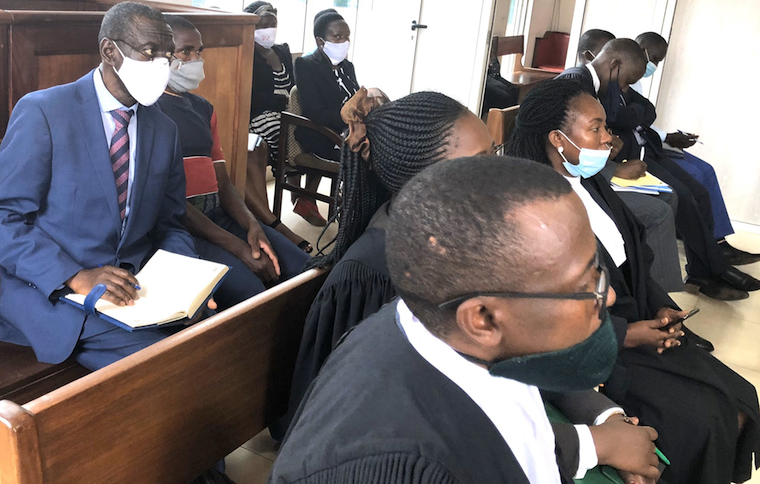
The treason trial of opposition politician Dr Kizza Besigye resumes today before the High Court in Kampala, with his physical presence still uncertain as the prosecution moves to its second witness after weeks of testimony from its key witness, Andrew Wilson.
The hearing comes after Justice Emmanuel Baguma on September 23 issued what he described as a final adjournment, following the failure of State prosecutors to appear at the agreed time.
The judge expressed frustration with the delay and warned that the case would not be repeatedly adjourned.
The prosecution is expected to continue with the testimony of its second witness, Dr Medadi Erisa Ssentanda, a senior lecturer in the Department of African Languages at Makerere University and coordinator of the university’s Centre for Languages and Communication Services.
Ssentanda is expected to face further questioning over the transcription of audio and video recordings that the prosecution intends to rely on as evidence against Besigye and his co-accused, Obeid Lutale and Captain Denis Oola.
The witness told court that Makerere University was paid Shs59.32 million to transcribe recordings contained on a flash disk supplied by the Criminal Investigations Directorate. He said the recordings covered alleged meetings in Geneva, Athens and Nairobi and had a combined duration of more than 25 hours.
However, the defence has objected to the admission of the transcription report, arguing that the original flash disk from which the recordings were transcribed has not been tendered in court.
The lawyers have questioned the chain of custody and whether the prosecution has established that the device taken to Makerere is the same one presented during the proceedings.
Ssentanda’s evidence follows several weeks of testimony by Wilson, a British-American security investigator who told court he had been working for the Ugandan government while secretly recording meetings involving Besigye and his associates.
Wilson’s testimony was particularly significant because of his account of the November 16, 2024 Nairobi operation that preceded Besigye’s arrest. He told court that the Riverside apartment had been arranged in advance and that two pistols were already inside before Besigye and Lutale arrived.
He later agreed with the defence that the guns and what was described as fake money had been planted as part of an intelligence operation.
Wilson subsequently described the Nairobi operation as a “sting”, saying he believed the meeting and arrests had been deliberately stage-managed.
His account also raised questions about the handling of evidence after the arrests, including his admission that he and an associate returned to the apartment and spent the night there after the police operation.
His testimony was further tested over the covert recording devices used during the operation. Wilson changed aspects of his earlier account of how two devices came into his possession, telling court that one had been handed to him by an associate who had hidden it in his coat, while he found another in a flower pot.
The defence also challenged Wilson’s credibility, his qualifications, the handling of recordings and his knowledge of some of the people later charged alongside Besigye.
His testimony nevertheless forms a central part of the prosecution’s case, which relies heavily on the recordings and accounts of meetings allegedly held in Uganda and abroad.
But as the evidentiary battle continues, Besigye’s participation remains another unresolved issue.
The opposition politician has not been physically present during the ongoing proceedings after he collapsed in court on July 29 while protesting the lawyers assigned to represent him.
The court subsequently allowed the trial to proceed in his absence.
Besigye, Lutale and Captain Oola face charges arising from allegations that they participated in meetings in Uganda, Kenya, Greece and Switzerland as part of a plan to overthrow the government.
They have denied the allegations.
Today’s proceedings will therefore test both the prosecution’s ability to move its evidence forward and the defence’s challenges to the authenticity and admissibility of some of that evidence, while the question of whether Besigye himself will be physically present remains unresolved.
By Nile Post.