Sudan: Government Confirms Full Return to Khartoum – Large Turnout At Al-Eisir Meeting With Sudanese Community in Kuwait
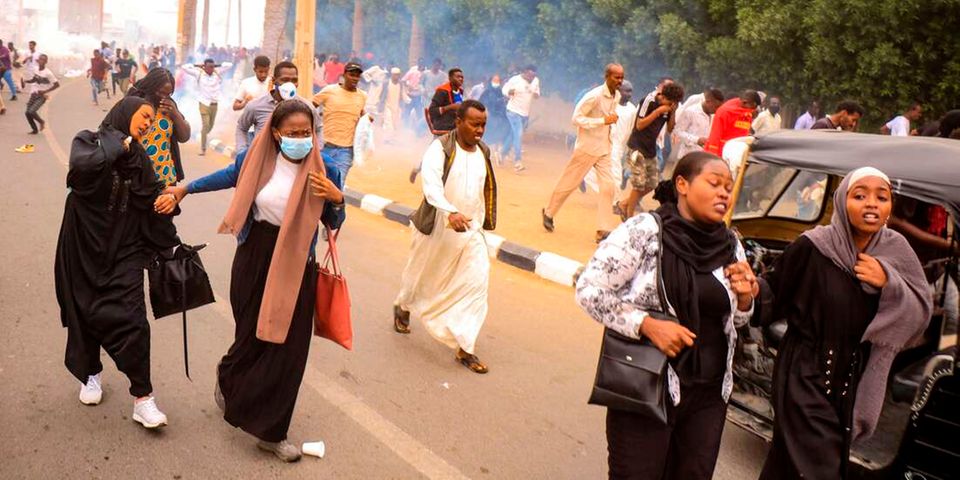
Kuwait — The federal government has confirmed its full return to the capital, Khartoum, and the resumption of its executive duties from within the city, stating that state institutions are now operating from Khartoum with their complete structures in place. It noted that only limited regional and international linkages remain outside the capital for purposes related to humanitarian coordination and official delegations.
Minister of Culture, Information, Tourism, and Antiquities Khalid Al-Eisir made the remarks during an extensive briefing session with the Sudanese community in Kuwait. He said two key meetings held over the past two weeks — one between the Transitional Sovereignty Council and the Council of Ministers, and another involving the full Cabinet — conclusively demonstrate that the federal government has effectively returned to Khartoum and is carrying out its work from there.
Al-Eisir stated that the capital sustained major infrastructure damage during the war due to the sabotage by rebel militias, particularly affecting electricity, water, and essential services. He affirmed that a specialized higher committee chaired by Member of the Transitional Sovereignty Council (TSC) Lt. Gen. Ibrahim Jabir is assessing the damage and developing urgent plans to rehabilitate Khartoum and restore vital services.
In this context, the minister pointed to positive developments in strategic facilities, noting that Khartoum Airport has recently received several flights and is now prepared to handle both domestic and international air traffic. He said this reflects the state’s seriousness in restoring services and rebuilding infrastructure, including water, electricity, and sanitation networks.
Al-Eisir called on citizens to return voluntarily to Khartoum, affirming that no impediments prevent Sudanese nationals from going back to the capital. He stressed, however, the need to consider the specific conditions of elderly people and persons with disabilities, whose return requires prior environmental and service readiness. He underscored the importance of youth participation in preparing suitable conditions during the recovery phase, particularly through neighbourhood clean-up and home rehabilitation efforts.
He added that the government is not imposing a return on any citizen but stressed that Sudan urgently needs qualified cadres and national expertise to contribute to reconstruction. He pointed to promising post-war economic opportunities and urged those interested in investment and employment to seize these opportunities early.
On the political track, the minister said the Prime Minister’s initiative is grounded in a realistic reading of Sudan’s historical experience and aims to dismantle the root causes of conflict and build sustainable peace. He said it moves beyond partial agreements that previously failed to address state and societal issues comprehensively, affirming that the proposed vision is based on sustaining peace, preserving state authority, and preventing militias from returning to executive power.
The statements came during a large public gathering held at the Sudanese Embassy in Kuwait on the sidelines of the minister’s participation in the “Kuwait Capital of Arab Culture 2026” events. Al-Eisir and his delegation — including Undersecretary Dr. Geraham Abdel-Gadir and Engineer Othman Al-Haj, member of the Arab Media Committee and supervisor of the Sudan page — received a broad and notably warm reception from members of the Sudanese community, in what attendees described as an unprecedented turnout for an official meeting.
The session lasted more than three hours and was marked by direct and candid discussion. The minister answered all questions calmly and at length, insisting on hearing every intervention without haste, which reinforced an atmosphere of trust and engagement with the community.
The meeting was also attended by the Eritrean Consul General in Kuwait, Simon Tekle Senbet Tesfaldet, who held a cordial exchange with the minister in the presence of Sudan’s Ambassador to Kuwait, Awad Al-Karim Al-Rayah, reflecting the warmth of relations between the two brotherly peoples.
Following the session, attendees of all ages gathered around the minister for commemorative photos and side conversations, in a scene reflecting strong ties between the state and its citizens abroad. Participants described the evening as one in which “Al-Eisir was held back by appreciation and affection,” noting that he entered the embassy as a government official and left surrounded by the community’s warmth and regard.
In his closing remarks, Al-Eisir affirmed the government’s determination to address accumulated challenges and to establish an economic and legal environment conducive to investment. He stressed the importance of the role of Sudanese communities abroad — particularly in Gulf countries — in supporting reconstruction efforts and building a modern state that meets the aspirations of the Sudanese people and lays the foundation for a new phase of stability, peace, security, and coexistence.
By SNA.