Africa’s Climate Projects Deserve More Than Risk Perceptions
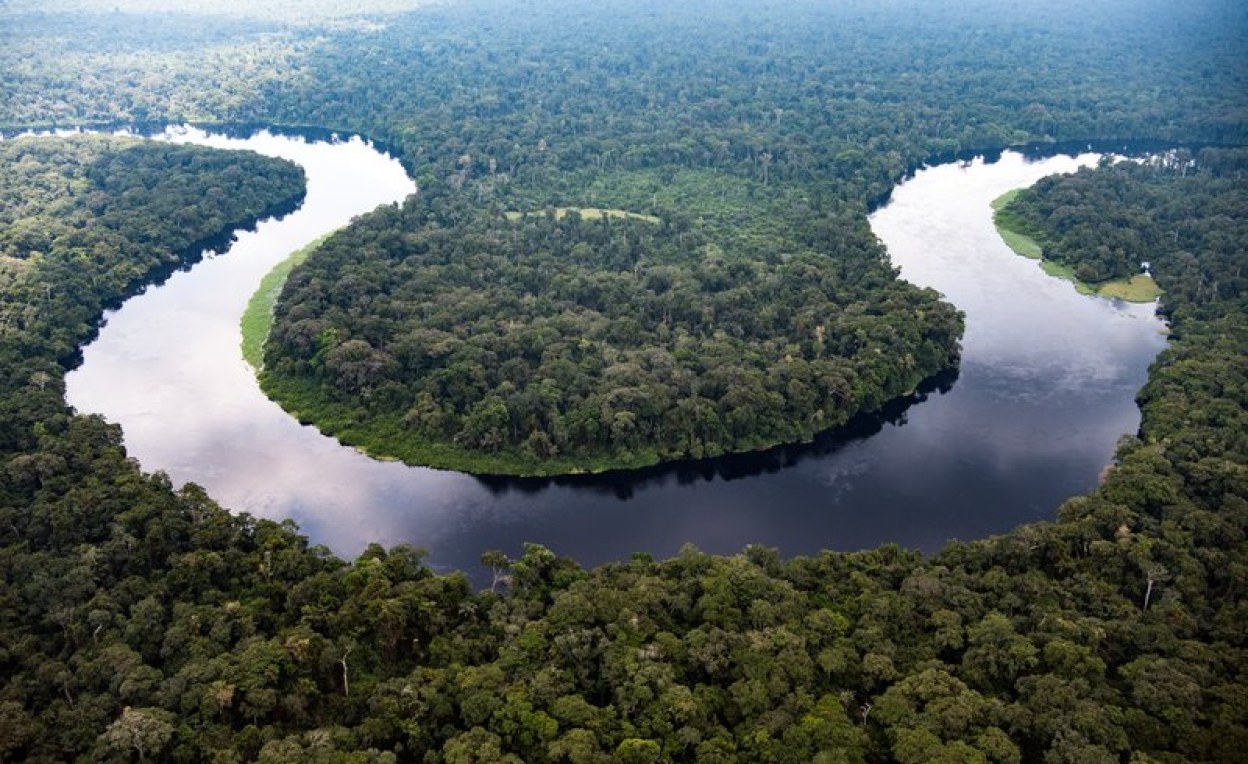
Africa is in a difficult financial situation regarding climate change. The continent accounts for less than 4% of global greenhouse gas emissions yet is one of the most climate change-exposed regions in the world. Droughts, floods, and increasingly erratic rainfall are all having a major impact on people, their livelihoods, and their economies. At the same time, there are massive climate investment opportunities on the continent, such as renewables, clean cooking, forest conservation, land restoration and sustainable agriculture.
Africa needs hundreds of billions of dollars every year to underpin clean energy, climate adaptation and resilient development, and yet it still receives a very small share of global climate finance. A large proportion of that finance is in the form of loans rather than grants. Local institutions and project developers often find it very difficult to access the finance they need to deliver on the ground.
Private investment and carbon markets are increasingly considered as a way to close the gap. Through mechanisms under Article 6 of the Paris Agreement and voluntary carbon markets, countries can attract private capital to support emissions-reduction projects while advancing their national climate commitments. Several African countries are already moving. Kenya has updated its laws to attract carbon market investment. Ghana is building an Article 6 pipeline covering clean cooking, low-emission rice farming, waste management and electric mobility. Senegal has also authorised initiatives supporting the transition to electric vehicles
High project development costs, limited access to financing, regulatory uncertainty and concerns over carbon pricing can prevent promising initiatives from reaching implementation. There are also questions about who benefits from the revenues generated by carbon projects, particularly when they involve community land and natural resources.
At COP31, the real challenge will be in translating those climate commitments into investments that can actually be scaled up.
Jocelyne Landry Tsonang, Co-Founder of Nature Crest, Verified Carbon Market Collaborative (VCM+) Fellow, has over 11 years of experience in structuring carbon and green finance projects across Central and West Africa. She talks about what needs to change in order to unlock climate finance for Africa, how carbon markets can support Africa’s development priorities, and why communities need to have a greater share in climate finance, including in relation to the super pollutant projects.
Can you walk us through your journey from environmental and natural resource management and circular economy work into co-founding Nature Crest and becoming a VCM+ Fellow?
I started my career in 2014 at a national consultancy firm in Cameroon, where I was appointed directly as Head of the Natural Resource and Environmental Management Unit. I coordinated proposal development and project delivery with teams of consultants, and led the preparation of major national strategic documents for Cameroon. I then joined an international consultancy firm, where I focused on circular economy roadmaps across Africa. I was part of the team that developed Africa’s first national circular economy roadmap for Rwanda, and went on to work on roadmaps for Tunisia, Ghana and Cameroon, among others.
A turning point came when I was selected for the Young African Leaders Programme at the European University Institute’s School of Transnational Governance. Those three months of intensive lectures and practical sessions opened my eyes to how far Africa lags in access to sustainable and climate finance. I decided not to return to full-time consultancy and to devote most of my time to closing that gap instead.
I joined Green Bond Corporation part-time as Project Manager for Africa, working on large projects with ticket sizes of at least U.S.$100 million. That work was valuable, but another layer needed attention. So, with a few associates, I co-founded Nature Crest to tackle the problem at the source: building stakeholders’ capacity and developing and structuring carbon projects. Carbon finance is a tangible way to fund environmental projects, and their co-benefits attract development finance too. As a market-based tool, it is also far more within reach of national and subnational governments and communities than climate finance mechanisms that are often complex and inaccessible.
Becoming a VCM+ Fellow was a natural continuation, because the platform’s core principles align closely with my work at Nature Crest. Through AFRICO2, we are building a one-stop shop that makes Africa’s carbon project ecosystem more transparent and accessible. And through Nature Crest, we want to increase the flow of carbon and climate finance into Francophone Africa, which is why Nature Crest and Green Bond Corporation are co-convening the Central Africa Sustainable Investment Forum (CASIF) in June 2027.
You have spent more than 11 years working on carbon and green finance projects across Central and West Africa. What has your experience taught you about the biggest barriers preventing African climate projects from accessing finance?
There are many barriers, but a few stand out.
The first is the low development of regulatory frameworks, which are a prerequisite for attracting investment. Investors want clarity on who owns the carbon rights, how benefits are shared and how authorisations work, for instance under Article 6 of the Paris Agreement. Where these rules are missing, investors simply wait.
The second is low access to information. You are sometimes surprised that even top government officials don’t have access to key information on carbon markets and climate finance opportunities. Without that information, it is hard to put the right policies in place.
Language is also a barrier. Major communications are done in English, and even the media interested in these topics are predominantly English-speaking. Carbon markets don’t speak French yet, and Francophone Africa is too often left out of the conversation.
Then there is the lack of technical capacity to structure fundable projects. Many good ideas never reach investors because they are not packaged the way investors need them to be.
Finally, perceived country risk plays a role. Even a solid project can struggle to attract finance, or pay more for it, because of how its country is perceived. That is why capacity building and transparency are at the heart of our work at Nature Crest and AFRICO2.
Africa has huge potential for climate action, from forest conservation and restoration to renewable energy. But many projects are stuck in the transition from idea to implementation due to a lack of financing. What needs to change to unlock more investment into African climate projects?
First, we need to get project structuring right. Most projects don’t make it to financing because they are not well structured or not mature enough. A good idea is not yet a bankable project: investors need a clear business model, solid data and a credible implementation plan. Capacity building is the way to bridge this gap, both for project developers and for the public institutions that support them.
Second, project developers need to know exactly which doors to knock on for funding. They have to go out and look for it, and not just sit back waiting for funds to come searching for them.
Third, investors should look beyond the perceived risk of a country and focus on its actual solvency: its track record and how consistently it repays its loans. That gives a much fairer picture than perception alone.
Finally, we need to make climate finance cheaper. Today, the cost of capital for clean energy projects in Africa is two to three times higher than in advanced economies. This has to change, because when it comes to climate, the development of one is the thriving of all. Every project with climate benefits in Africa is a gain for the whole planet.
Carbon markets are increasingly being presented as a way of attracting private financing for climate action. How then can African countries make use of these markets without ending up too dependent on carbon credits or putting their development objectives at risk?
The carbon market is a market-based tool, so it operates on the rules of supply and demand. Prices go up and down, and demand can shift. That is exactly why African countries should treat carbon finance as an additional source of funding, not the only one.
Used well, these markets are an important tool for African countries because they serve not only climate objectives but development objectives too. Imagine a community that develops an agroforestry project. The community benefits from the crops grown on the project land. The project creates jobs for the most vulnerable members of the community, giving them a steady income. It funds local infrastructure such as classrooms and clean water systems, and sometimes even financial literacy training, which can be life-changing. A project like this delivers far more than carbon benefits.
Carbon finance can also be an additional source of funding for clean energy, clean mobility, clean water and clean cooking projects, which all bring real development benefits to local communities.
To avoid dependence and protect their development objectives, countries should make sure that every carbon project developed on their territory is aligned with national development goals and builds lasting wealth. This is where clear national frameworks matter. The money earned from this market should then be reinvested in other development projects, so that carbon revenues drive sustained national development rather than becoming an end in themselves.
Private investment is usually driven by the desire to achieve financial returns, while local communities focus on matters like livelihoods, land rights, and access to resources. How are carbon and green finance projects able to reconcile the interests of investors with the needs of local communities?
It starts with genuine stakeholder consultation, not a box-ticking exercise. Communities must be consulted before a project begins, through a process of free, prior and informed consent, and they must have the right to say no.
Projects should be done with the communities and should work for the communities, not against them, so that their dignity is preserved. In practice, this means clarifying land and carbon rights from the start, agreeing in writing on how the benefits will be shared, and giving communities a real voice in how the project is governed.
Access to information is just as important. Communities need to understand what is happening on their land, what the project earns and what they are entitled to. This requires several layers of information sharing, such as community meetings, local languages, local radio and community representatives, not just technical reports that are not accessible to everyone. Communities must also be able to flag a misalignment at any time, through a grievance mechanism that is easy to use and that actually responds.
On the investor side, profit cannot be the only focus. There has to be a balance between profit and impact. But I would add that the two are not really in opposition. A project that communities support is a project that lasts. When communities feel ownership, they protect the forest, they maintain the infrastructure, and the carbon benefits are more durable. When they feel excluded, conflicts arise, projects stall and investors’ reputations suffer. Respecting communities is not only the right thing to do; it is also the best way to protect the investment.
Pollutants such as methane, black carbon, and hydrofluorocarbons have a great effect on global warming, yet they are given less attention than carbon dioxide. What opportunities are there for African countries to draw in climate finance in order to reduce these pollutants?
Poor waste management is one of the biggest sources of these pollutants in Africa, especially in our cities. Open dumpsites release large amounts of methane, and the open burning of waste releases black carbon. Cooking with solid fuels at home is another major source of black carbon, which is why clean cooking is also an important opportunity.
Carbon finance can be used as co-funding to run proper waste management systems across the whole chain: from efficient waste segregation at the source, to collection, to the recycling and processing of organic waste through technologies like composting, black soldier fly farming and others. Methane released at existing dumpsites can also be captured and either flared, which turns it into CO2, a far less potent gas, or used to produce energy.
It all comes down to structuring investable projects that can benefit from blended finance, with carbon finance as an important part of the financing model. Carbon revenues alone will rarely cover the full cost of a waste management system. But combined with public funding, municipal fees and concessional finance, they can make the difference between a project that stays on paper and one that gets built.
All big African cities should seriously consider this, because short-lived climate pollutants are having disastrous effects on the people living in them. Air pollution is estimated to cause around one million premature deaths a year across the continent. A good waste management system will also drastically reduce the open burning of waste, which means cleaner air, healthier neighbourhoods and new green jobs.
How can African countries make sure that the funding from carbon markets intended for reducing super pollutants leads to tangible health benefits for vulnerable communities when achieving reductions in emissions?
Emission reductions should never be the only result we measure. For vulnerable communities, the real test of a super pollutant project is whether people breathe cleaner air and live healthier lives.
First, it starts with where the money goes. The people most exposed to these pollutants are often the most vulnerable: families living next to dumpsites, waste pickers working on them every day without protection, and women and children breathing smoke from cooking with firewood and charcoal. Projects should reach these groups first. A waste management project, for example, can formalise waste pickers and give them protective equipment, decent working conditions and access to health coverage.
Second, we need to measure health, not only carbon. From my experience leading MRV work, what gets measured gets managed. If we only count tonnes of CO2 equivalent, health benefits remain assumptions. Projects should track simple indicators such as air quality around dumpsites or respiratory illness in households. Some carbon standards already allow clean cooking projects to measure and certify the health benefits they deliver, and African countries should make more use of this.
Third, countries should set clear benefit-sharing rules in their national frameworks, so that part of carbon revenues goes back into community health: local health centres, clean water and awareness campaigns. Carbon revenues should be reinvested in development, and health is one of the best places to start.
Fourth, health authorities should be involved from the design stage, so that environmental data and health data speak to each other. Capacity building has a role to play here too.
Finally, communities must have access to information on the results. They should know what the project has achieved and how the money has been used, and they should be able to raise concerns if the promised benefits don’t materialise.
At the end of the day, a tonne of methane avoided is good for the planet. But for a community, what makes the difference is a child who no longer coughs because of smoke from a dumpsite or a kitchen.
What concrete commitments should African governments and international climate finance partners call for to raise super pollutants to a climate negotiation priority at COP31?
Super pollutants offer Africa quick wins for both the climate and people’s health. They deserve a much bigger place in the negotiations, in Antalya and beyond.
African governments should commit to clear targets for super pollutants in their NDCs, especially in waste management, clean cooking and cooling. They must also invest seriously in data collection, which is paramount to writing fundable projects, and put in place the regulatory frameworks, including clear Article 6 rules, that make these projects investable. Cities, which are on the front line of waste management, need the means to act.
International climate finance partners should commit to dedicated and predictable funding for super pollutants, with a fair share for Africa. They should also make finance cheaper through guarantees and blended instruments, and support project preparation, capacity building, and MRV systems that track both emission reductions and health benefits.
Both sides must make information accessible to all, including in French, so that no country is left behind.
Super pollutants are not a side topic. They are one of the fastest and most cost-effective ways to deliver on the Paris Agreement while improving lives.