
Cricket World Status
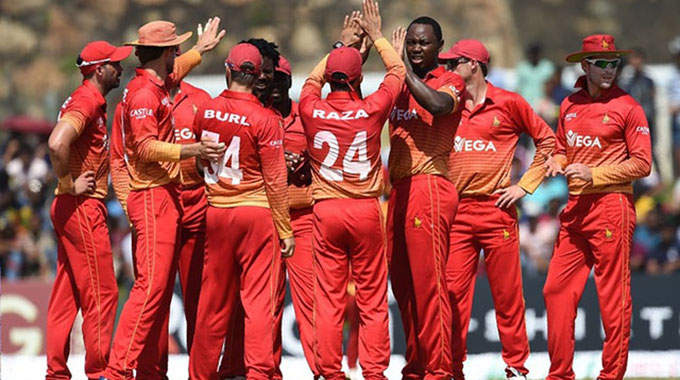
The article, written by their correspondent in Harare, expressed genuine fears for the future of a sport which, at its best, at the turn of the millennium, saw the country finish fifth at the ICC Cricket World Cup in England.
Australia won the tournament, after beating Pakistan by eight wickets, at Lord’s Cricket Ground in London.
But, it was the heroic exploits of the Zimbabweans, which captured the imagination of the world as the Chevrons came within touching distance of a place in the semi-finals.
They eventually finished fifth, which was a huge achievement for a small country like Zimbabwe, and our sensational three-run victory over India, in which Henry Olonga took three wickets in the final over, was probably the result of the tournament.
We also beat South Africa at Chelmsford by 48 runs, with all-rounder Neil Johnson the star of the show with his 76, with the bat, and 3-27, with the ball, in eight overs.
The world has always cared about the health of Zimbabwe cricket, charmed by the way we continue to produce a battery of very good players, and coaches, despite a small pool from where we pick such talent.
Every sport, around the globe, needs its David, the lightweight who keeps punching above its weight, the way Uruguay, a country of about four million, keeps defying the odds, whenever it comes to the FIFA World Cup.
That’s why the world doesn’t want to see cricket in this country dying, instead, the globe wants to see the game thriving because, as long as Zimbabwe continues to do well, it provides a model, and an inspiration, for other small nations, to also dream of dining with the heavyweights.
World cricket cannot grow, beyond what it is right now, with only the traditional heavyweights like England, Australia, India, Pakistan, South Africa, West Indies and New Zealand doing well. It needs the lightweights to keep challenging these traditional big boys, thereby sparking interest in these virgin territories, in terms of spectator appeal.
That’s why, in the pecking order of international cricket, Zimbabwe is a special case and the reason why the game’s powers would rather have the game thriving, rather than dying, in this country.
They know that, somewhere out there, in this country, is the next Andy Flower, who at one stage was ranked the best wicket-keeper batsman in the world, before he transformed himself into one of the finest coaches of his generation.
They also know that, somewhere, in this country, is the next Hamilton Masakadza, who became the youngest player, in the history of the game, to score a century on his Test debut.
That is the reason the world has been patient with us, when it comes to cricket, despite all the challenges that this game has faced, especially in the past 15 years.
“A nation that holds so much promise in the global game has repeatedly seen its development stunted by a dearth of international fixtures,’’ read the BBC report, which questioned whether our cricket could bounce back to the heights it touched at the turn of the millennium.
“The inevitable decision to call off the remainder of Zimbabwe’s domestic season leaves the national team players hoping that they might return to action at some point later in the year, having missed a home series against Ireland because of Covid-19.
“And this lack of action has seen them now slip below the likes of Oman and the Netherlands in the ODI rankings.’’
Two years ago, we hosted the ICC Cricket World Cup Qualifier in Harare and Bulawayo, where two countries had to fight to make it to the global cricket showcase.
Of course, somehow, we failed to secure that ticket after the Chevrons, needing just a victory over the United Arab Emirates, a team they are supposed to beat 10 times out of 10, wilted under pressure at Harare Sports Club and lost that game.
More than 15 000 people, a record attendance for a cricket match in this country, converged at Harare Sports Club for that decider, filling the stadium to capacity.
Authorities had to turn away, according to some estimates, about twice the number of people who were inside the stadium, to avoid a stampede inside the ground.
This was a big statement that cricket is, indeed, very popular in this country, even as a mass spectator sport, and is now officially the second biggest sporting discipline, after football.
Therefore, the Chevrons’ failure to make it to the World Cup, really hurt and, as has become the norm with this game, made headlines around the globe.
“Zimbabwe’s absence at Cricket World Cup ‘bitter pill to swallow’,’’ was the headline which Al-Jazeera chose.
Against that background, we are happy that the authorities at Zimbabwe Cricket have decided the time has come for them to play a leading role, in ensuring that this sport, finds itself back into the light.
The launch of the National Premier League, which is wholly sponsored by Zimbabwe Cricket, could not have come at a better time for the game.
“I am really excited because our club cricket league is a platform where we get an opportunity for the young, and upcoming cricketers, to mix with all the experienced guys,’’ Masakadza, who is now the ZC director of cricket, said at the launch.
We have always generated a lot of pride, as Zimbabweans, in being one of the few Test-playing nations in the world and only the second best cricket-playing country, on the continent, after South Africa.
It’s a status we earned and one we should always jealously protect and, investment into our domestic game, is one way of ensuring the future might be bright.