Former Somali president accuses government of intimidation following clashes
There is heightened tension in the Somali capital, Mogadishu, after a second day of gunfire on Thursday between the army and opposition forces.
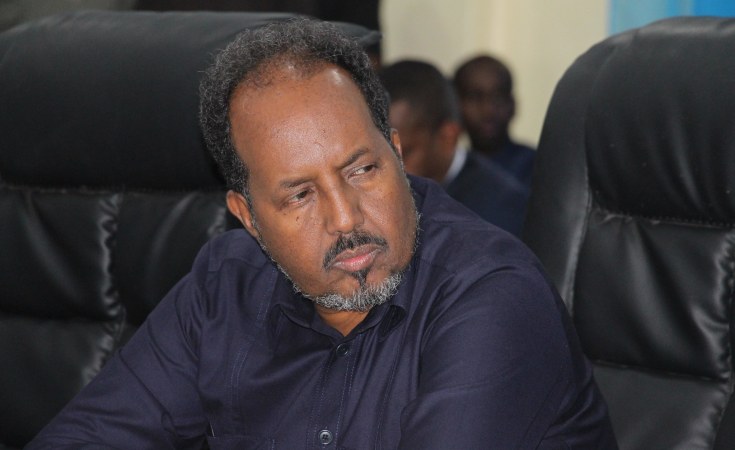
Former Somali President Sharif Sheikh Ahmed accused the government of “intimidation” following the clashes.
Residents reported heavy gunfire and explosions as fighting broke out in several neighbourhoods.
“Movement of both transport and people were restricted. This instilled us [with] fear, so I hope things will change and become normal,” said Mogadishu student, Abdullahi Nur.
The violence flared up ahead of planned protests over President Hassan Sheikh Mohamud’s decision to extend by a year his term, which expired last month, and push back elections.
Ahmed, who was in power from 2009 to 2012, said security forces targeted his home and accused Mohamud’s government of “illegally altering the constitution.”
“I am telling the forces that attacked me that the president’s term in office has expired, and we have committed no wrongdoing. Why then are you trying to intimidate us and attack us,” he said.
The government and opposition have traded blame for the violence which prompted calls for restraint from the United Nations.
Opposition leaders accused security forces of attacking residences linked to former Prime Minister Hassan Ali Khaire and Ahmed.
Mogadishu police said the violence stemmed from “organized attacks” carried out by armed militias linked to groups pursuing political interests.
Police said state security forces repelled attacks on their positions and launched investigations to identify those responsible for organizing, financing and carrying out the violence.
Opposition figures said the rally planned for Thursday was intended to protest what they call constitutional violations and efforts by the president to extend his tenure.
The government has rejected those allegations.
The clashes highlight growing political tensions between the two sides as disputes over the country’s electoral and constitutional direction increasingly strain relations.
Mohamud has been trying to move Somalia towards democratic elections, replacing a system in which clan elders choose MPs, who in turn select a president.
The country has endured conflict and clan battles with no strong central government since the 1991 fall of autocratic ruler Mohamed Siad Barre.
Somalia continues to fight an al-Shabaab insurgency while seeking to strengthen state institutions with support from international partners.