
Kenya: Can Kenya Turn Its Cotton Comeback Into A Genuine Industrial Revival?
Kenya is growing cotton again. But the bigger question is whether it can turn the crop into an industrial engine and keep more of the value at home.
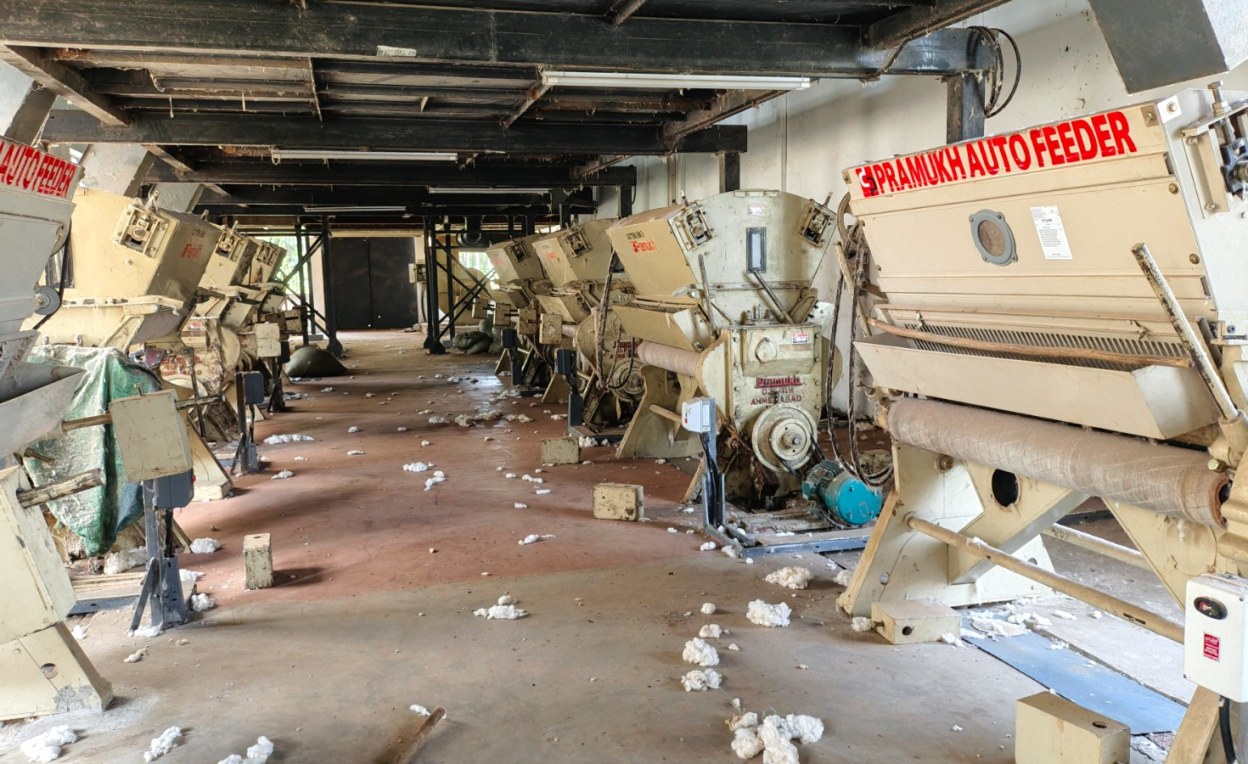
The machines have stopped. Inside Luanda Ginnery in Busia, the belts and rollers that separate cotton fibre from seed sit motionless. The noise that would normally fill the building has disappeared. For about four months, there has been no cotton to process.
Outside, however, the next story is already taking shape. Across the farms of Busia, cotton plants are about two months old. Farmers are watching the skies, waiting for the rains they hope will give the crop the push it needs.
The landscape is hot and dusty. The roads leading to some of the farms are rough, forcing farmers and visitors to rely on boda bodas (motorcycle taxis) to reach fields hidden away from the main roads. Yet there is optimism. The cotton is growing. And with it, the hope that the industry that once supported thousands of families can find its way back.
Vincent Akumu wants to expand. His ambition is to grow cotton on five acres, up from the one and a half acres he farms today. The problem is getting there. Land preparation remains difficult because machinery is scarce. Farmers often depend on county equipment, hire machines when available or resort to labour-intensive manual preparation. Then there is seed. A late delivery can push farmers outside the narrow planting window.
Vincent knows what that means. “The rainy season cannot wait for farmers,” he says.
That simple observation captures one of the biggest challenges facing Kenya’s cotton revival. The country may have farmers willing to grow the crop. It may have ginneries. It may have textile mills. It may have a market. But all those pieces have to work at the same time. Because cotton is not really a story about a plant. It is a story about what happens after the plant is harvested.
Kenya’s cotton industry has been here before. According to research by the Kenya Agricultural and Livestock Research Organisation (KALRO), national cotton production reached an all-time high of about 70,000 bales in 1985/86. By 2001, production had fallen to about 20,000 bales. The collapse was not caused by one problem. KALRO’s research points to a combination of factors, including poor agronomic practices and pest control, delayed payment to farmers, mismanagement of cooperatives, exploitation by middlemen, poor pricing and poorly managed ginneries.
Rising imports of second-hand clothes, known in Kenya as mitumba, also weakened demand for locally manufactured cotton garments. The result was a vicious cycle. Farmers stopped planting. Ginneries struggled for raw material. Factories lost reliable supplies. Investment became harder to justify. And the industry shrank further.
For communities that had once depended on cotton, the consequences were profound. Farmers switched to maize and other food crops. And the machines built to process cotton increasingly became monuments to an industry that had lost its way.
But Kenya is attempting another turnaround. This time, the ambition is considerably bigger.
The government’s vision is to increase production while strengthening certified seed development, textile mills and garment manufacturing, with the private sector playing a bigger role in the value chain. But between the 500,000-tonne ambition and Vincent’s one-and-a-half-acre farm lies the difficult part: production, processing, investment, markets, infrastructure, skills and time.
Small farms, big ambitions
In Busia, most cotton farmers are not operating on large commercial plantations.
That small scale creates a problem for an industry that wants predictable volumes. Luanda Ginnery can process cotton. But a ginnery cannot run on machinery alone. It needs farmers. And farmers need markets. Barasa puts it bluntly: “If they don’t grow cotton, then we don’t have raw materials. That means we won’t move on.”
It is the central contradiction of the revival. Kenya needs more cotton to make its ginneries viable. But farmers need functioning ginneries, reliable markets and predictable prices to make cotton worth growing. That is why the cooperative is critical. It is the bridge between the smallholder and the industrial system.
Bernard Ojiambo, the union’s chairman, says cotton has been grown in the region for decades. But years of delayed payments and weak markets pushed farmers towards maize. Today, he believes cotton can once again provide a stronger cash income. “Cotton is more of a value than maize,” he says. But farmers need support to expand.
Ojiambo says a lack of machinery delays land preparation. “We delay because we don’t have machines like tractors and other things to support farmers.” The cooperative has been seeking investment in machinery and transport to improve its ability to serve farmers. For Vincent, mechanisation would mean the opportunity to expand. For the ginnery, it would mean more raw material. For the textile mill, it would mean more cotton. And for the economy, it could mean another step towards rebuilding an industry.
For farmers such as Mama Aisha Mohammed, the change is not measured in tonnes. It is measured in school fees. Food. Livestock. And the ability to improve a household.
Aisha, from the Bajuni community, had largely grown maize and green grams for household consumption before cotton became a commercial opportunity. After her first harvest, she was able to pay school fees and provide for her grandchildren. Julia Njuguna tells a similar story. Income from cotton enabled her to build a new house and improve her family’s living standards. She now sees cotton as a crop her children can build a future around.
These stories matter because they show what happens when the first link in the chain begins to work. But the real test comes after the farmer sells the cotton.
A garment can be assembled in Kenya using imported yarn or imported fabric. It is Kenyan-made. But the value chain behind the garment may stretch across several countries. Kenya’s bigger opportunity is to shorten that chain. Cotton grown in Busia or Lamu. Ginned in Kenya. Spun in Kenya. Woven in Kenya. Dyed and finished in Kenya. Cut and stitched in Kenya. Sold in Kenya or exported. That is how one crop becomes an industrial ecosystem.
As Olweny puts it: “The more stages we keep in Kenya, the more employment we create.”
Those stages create opportunities far beyond the farm. Transporters move cotton. Engineers maintain machinery. Technicians operate textile equipment. Workers spin yarn. Others weave and dye fabric. Garment workers cut and stitch. Packaging companies supply factories. Retailers sell the finished product. Graduates of technical and vocational training (TVET) institutions and university researchers become part of the industrial workforce. The cotton plant may begin in a field. But its economic footprint can stretch across an entire country.
The import paradox
There is, however, a striking contradiction in Kenya’s cotton story. While the country wants to dramatically increase domestic cotton production and rebuild its textile industry, it continues to import large quantities of cotton products.
A factory cannot plan production around uncertainty. It needs cotton when it needs it. It needs quality that can be predicted. It needs enough volume to justify machinery and workers. And it needs markets for the finished products.
That makes the problems farmers describe — delayed seed, inadequate machinery, limited finance and small acreage — industrial problems too. A farmer waiting for seed is not just an agricultural story. It is a textile factory waiting for raw material months later. A cooperative without a tractor is not simply a rural development issue. It is a supply-chain bottleneck. A silent ginnery is not merely an idle building. It is evidence that one link in the industrial chain is missing. And a textile mill relying on imported yarn tells another part of the story. The value chain remains incomplete.
KALRO’s research demonstrates both the potential of cotton and the painful history of its decline. Farmers in Busia are returning to the crop. Lamu has demonstrated that farmers can respond when the economics improve. Cooperatives are asking for machinery and finance. Ginneries are waiting for raw material. Textile companies are asking for reliable supply and investment. And the government is talking about taking production from tens of thousands of tonnes of lint towards half a million tonnes.
As the sun sets over Busia, the cotton fields remain quiet. The plants wait for rain. Vincent waits too. He wants his five acres, and a crop that will educate another generation of his family. A few kilometres away, Luanda Ginnery waits for cotton. The machines will eventually start again. The challenge is making sure they never again fall silent because farmers have abandoned the crop. And beyond the ginnery, another set of machines waits at textile factories. Their future depends on what happens in fields like Vincent’s.