Kenya: Maraga Questions New Police Uniform Procurement, Alleges Graft
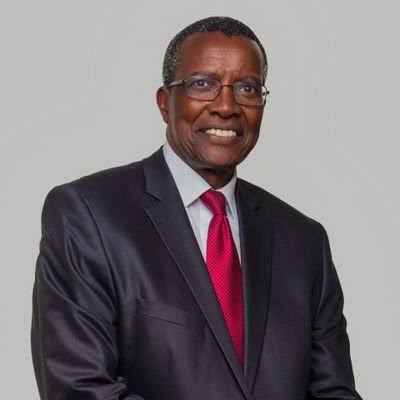
Nairobi — Former Chief Justice David Maraga has questioned the procurement of Kenya’s new police uniforms, alleging that corruption and a lack of transparency have marred the implementation of recommendations made by the National Taskforce on Police Reforms.
Maraga, who chaired the task force, said the change of police uniforms was among more than 200 recommendations contained in its report submitted to President William Ruto in November 2023.
He, however, criticised the manner in which the uniform recommendation has been implemented, saying the process had been tainted by alleged graft and opacity.
“Whereas police uniforms were part of the over 200 task force recommendations, the attempt to implement it already [has been] marred by corruption and opaqueness,” Maraga said.
His remarks came days after President Ruto unveiled the new Kenya Police Service General Duty uniforms during a passing-out parade at the National Police College in Kiganjo, Nyeri County, on August 28.
The new uniforms mark a return to the traditional colour scheme after the bright blue General Duty uniform introduced in 2018/2019.
The Maraga-led task force had recommended changes to the police uniform following concerns raised by officers over the existing attire. The task force had also raised questions about the process through which the previous blue uniform was introduced, including inadequate consultation with officers and the role of the National Uniforms Committee.
The National Police Service has rejected allegations of irregularities in the procurement of the new uniforms, saying the process was conducted in accordance with the law.
In a statement issued on Sunday, NPS spokesperson Muchiri Nyaga said Bedi Investments Limited was awarded the contract to manufacture and stitch the uniforms.
The Service also denied reports linking Nalitex Limited to the procurement, saying the company did not participate in the development, selection, procurement or manufacture of the new uniforms.
NPS said Nalitex was neither awarded the contract nor engaged as a subcontractor and had not received a purchase order or payment from the Service.
According to the police, four local textile manufacturers — Bedi Investments, Rivatex East Africa, Thika Textile Mills and Sunflag Textiles & Knitwear Mills — were invited to submit samples.
NPS said only Bedi Investments and Rivatex submitted samples within the stipulated period, after which Bedi’s sample was selected following evaluation and public participation.
The Service said the subsequent procurement was undertaken under the Public Procurement and Asset Disposal Act, 2015, and applicable regulations.
Beyond the uniform controversy, Maraga has renewed calls for the full implementation of the task force’s recommendations, warning that cosmetic changes to the police service will not address deeper institutional problems.
He has cited reforms including an independent police service, transparent recruitment and promotion of senior officers, as well as changes aimed at strengthening accountability within the National Police Service.
Maraga has also criticised the continued delay in implementing the task force’s more than 200 recommendations, saying the reforms are critical to restoring public confidence in the police.
“Unless the independence of the police service is restored, we will not have a country,” he said.
The renewed debate over the police uniform therefore comes against a broader push for police reforms, with Maraga arguing that the Government should focus on implementing the task force’s recommendations in full rather than selectively adopting individual proposals.
By Capital FM.