Mauritius: Why Is an Island Importing Fish?
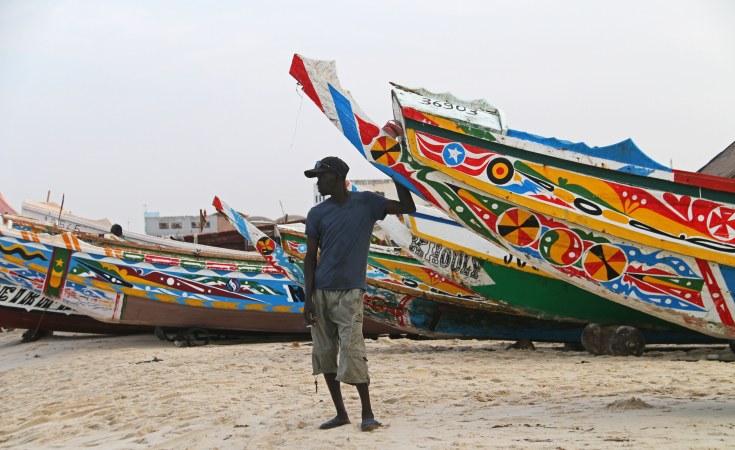
Mauritius has always had an odd relationship with the sea. We live on an island, boast an enormous maritime zone and speak enthusiastically about the Blue Economy. Yet when it comes to putting fish on the table, we remain heavily dependent on imports. The government’s new ambition to raise local fish production from roughly 5,000 tonnes to 15,000 tonnes within three years is therefore more than a fisheries policy. It is an overdue attempt to reconnect an island economy with its most obvious natural asset. The ambition deserves encouragement. But ambition is not the same thing as production, and a spreadsheet of potential catches does not automatically become fish in a market.
The proposals put forward by the Fisheries Division of the Ministry of Agro-Industry are refreshingly broad. They range from betterequipped artisanal boats and smart fish-aggregating devices to semiindustrial vessels, deep-water banks, tuna longlining, aquaculture and the landing of foreign vessels’ by-catch. The proposed fishing port and seafood-processing hub could give the sector something it has long lacked: an industrial backbone linking landing, cold storage, processing, logistics and markets. That matters because the objective should not merely be to catch more fish. Mauritius needs to capture more value from the fish it catches.
The numbers are certainly attractive. The plan envisages semi-industrial production rising substantially, renewed activity on the banks, greater use of tuna resources and thousands of tonnes of by-catch being landed locally. Aquaculture, meanwhile, could become a particularly important part of the equation. If 90% of existing aquaculture production is exported while Mauritius imports fish, something in the system is clearly not quite right. Encouraging producers to dedicate a share of commercially viable output to the domestic market is sensible, provided the economics remain attractive.
There is another virtue in the approach: diversification. A resilient food system should not depend on one fishing ground, one species or one production method. Wild fisheries, marine and inland aquaculture, seaweed and other emerging activities can form complementary parts of a larger seafood economy. That is what a genuine Blue Economy should mean-not a fashionable label attached to isolated projects, but an integrated economic strategy. Yet the target of 15,000 tonnes should not become a political fetish. The ministry’s own figures reveal why. Some fisheries are already under pressure. Capital requirements are substantial. New vessels need crews, maintenance, financing, navigation and reliable markets. Aquaculture requires feed, seed, technical expertise and environmental discipline. And every increase in extraction from the ocean must ultimately be reconciled with the biological capacity of that ocean to replenish itself.
This is where the ministry’s initiative needs a second half: measurement and risk management. Every new boat, fishing ground and aquaculture project should sit within a clear assessment of stocks, carrying capacity, economics and environmental impact. Sustainable yield cannot be treated as an afterthought once the investment has been made. The sea does not negotiate with ministerial targets.
Nor should Mauritius confuse greater access to the ocean with greater national food security. The real test will be whether more locally produced fish reaches consumers at competitive prices, whether fishermen earn better and more stable incomes, whether processing creates jobs and whether imports actually fall.
The proposed fishing port could be pivotal here. If properly designed, it could turn fisheries from a collection of small activities into a value chain: landing, auctioning, refrigeration, processing, packaging, waste recovery and export. That would be a far more consequential investment than simply adding boats to the water.
Mauritius has spent years discussing the Blue Economy as an opportunity. It is time to make it an economic discipline. The ministry’s 15,000- tonne ambition could be a useful start. The challenge now is to ensure that, in pursuing the opportunities offered by the ocean, Mauritius does not spend its way into exhausting them. An island surrounded by fish should not have to import so much of it. But the answer is not simply to fish harder. It is to fish smarter, farm better and build an industry capable of making the ocean work for Mauritius without consuming its future.
By L’Express.