Nigeria: 28 Killed Despite Curfew in Plateau
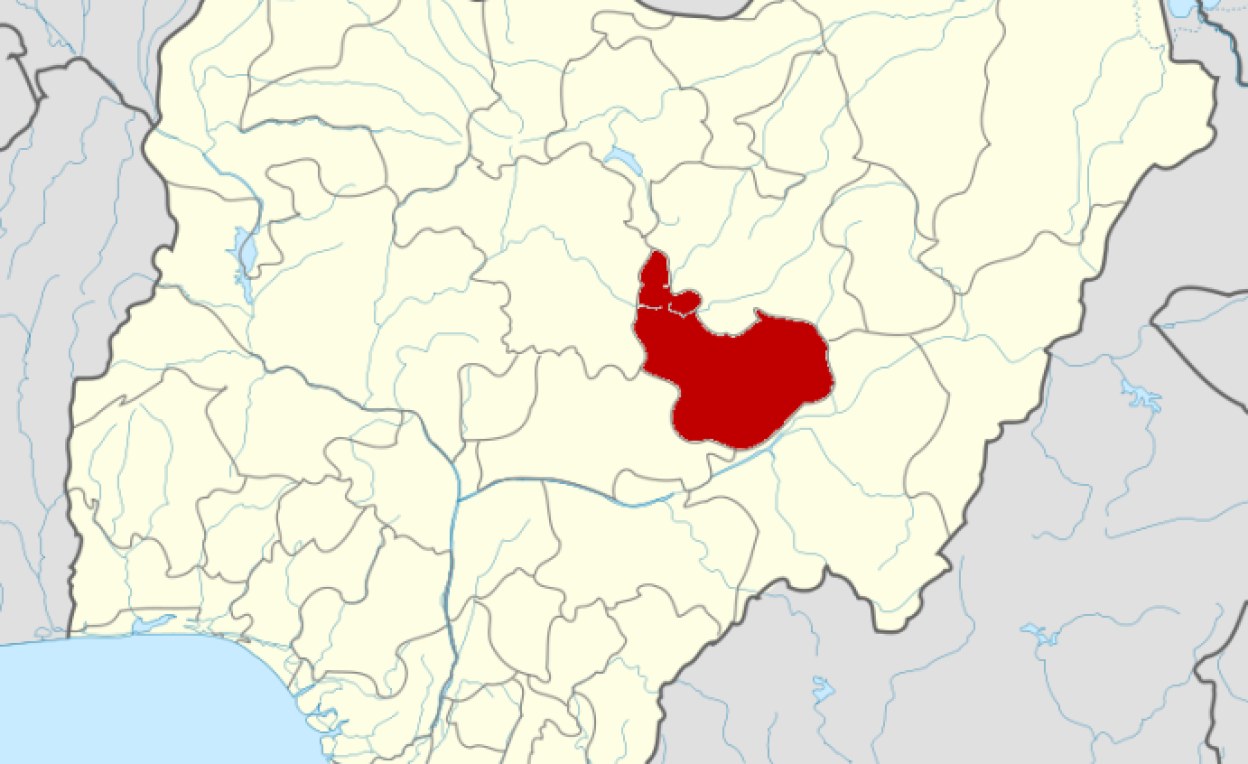
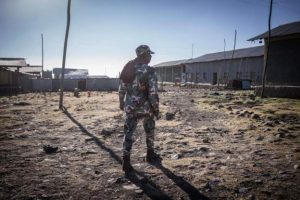
At least 28 people have been killed in a renewed wave of attacks across three local government areas of Plateau State despite a dusk-to-dawn curfew imposed by the state government on September 21 to restore peace and prevent further loss of life.
The affected areas, including Mangu, Bokkos and Barkin Ladi, have witnessed repeated attacks in recent weeks, leaving thousands of residents living in fear, disrupting farming and cattle grazing and forcing many people to abandon their livelihoods.
Daily Trust reports that the latest incident occurred yesterday where two people were killed and six others injured following an attack on Sunday evening on Fulani herders in a pick up vehicle around Total filling station in Bukuru, Jos South Local Government Area of Plateau State.
The latest attack occurred less than two weeks after gunmen attacked herders around Kassa community of Barkin Ladi, killing five and injuring one.
The state chairman of Miyetti Allah Cattle Breeders Association of Nigeria (MACBAN), Ibrahim Yusuf Babayo, who confirmed the incident in Jos yesterday said the gunmen attacked the vehicle around 5:30 while they were returning from the Cattle market to Bassa LGA of the state.
The chairman condemned the incident and called on the security agencies to track down those responsible and bring them to justice. He described the attack unprovoked and disturbing.
He said the insured victims have been rushed to the hospital, adding that one person was missing.
The spokespersons of Operation Enduring Peace and State Police command, Captained Polycarp Oteh and SP Alabo Alfred, didn’t respond to inquiries from our correspondent as of press time.
Plateau had continued to witness attacks and killings despite the curfew imposed by the government.
In September alone, many people, including men, women and children, were reportedly killed, while houses and farmlands were destroyed and hundreds of cattle shot dead. The attacks have displaced families and disrupted economic activities across several communities.
Worried by the deteriorating security situation, the Plateau State government, through the Commissioner for Information and Communication, Joyce Ramnap, imposed an immediate dusk-to-dawn curfew on Barkin Ladi, Bokkos and Mangu on September 21.
The restriction of movement, which took effect that day, runs from 6pm to 6am daily until further notice. The government said the measure was intended to enable security agencies to stabilise the affected areas, protect lives and prevent a breakdown of law and order.
Security operatives were also directed to enforce the curfew and a ban on motorcycles in the affected areas.
However, the measure has failed to halt the killings, with several attacks recorded after its imposition.
The development has raised fresh concerns about the effectiveness of the security measures and the ability of security agencies to protect residents in the volatile communities.
More killings after curfew
Meanwhile, the attacks have continued despite the curfew and the visit of the Inspector-General of Police, Olatunji Disu, to the state on September 16 following killings in Mangu and other parts of Plateau.
During his visit, Disu said the police were committed to restoring peace and strengthening security operations in the state.
He assured residents that the police would continue to work with stakeholders to find lasting solutions to the crisis, stressing that sustainable peace required synergy and collaboration between security agencies and communities.
But fresh attacks were recorded in the affected communities.
On September 20, five Fulani herders were killed in Kassa community, Barkin Ladi, while transporting cattle from Bokkos to Jos South.
The following day, the state government announced the curfew.
On September 22, gunmen reportedly ambushed security operatives attached to Operation Rainbow along Gagshi Road, killing a police officer. Three Berom farmers were also reportedly killed at Rakok community in Barkin Ladi on the same day.
In Mangu, three vigilantes of Mwaghavul extraction were ambushed and killed at the Kyikyau-Gyambwas boundary.
Two Berom miners were killed at Gangare community, Barkin Ladi, on September 23 while carrying out mining operations.
The following day, a 27-year-old Fulani herder was killed, and 30 cattle reportedly rustled around Banka village in Mangu.
On September 25, three vigilantes, including a youth leader, were killed in Kassa community, Barkin Ladi. The attackers reportedly stormed the community around 1am and opened fire on the victims, who were said to be on duty protecting the area.
The killings prompted protests, with residents reportedly calling on soldiers stationed in the area to leave, expressing frustration over repeated attacks despite the presence of security personnel.
On September 26, five miners were killed and two others injured when gunmen ambushed them at Marit community in Barkin Ladi.
The violence spread further on September 27 when gunmen attacked a herding community in Lamor, Pushit District of Mangu. More than 20 cattle were reportedly killed, while several others were injured and more than 70 remained missing.
A Fulani herder was also killed around Rakung village in Barkin Ladi on the same day.
On September 28, three women working at a mining site in Rakum community, Barkin Ladi, were killed and another person injured after gunmen opened fire at the site.
A 14-year-old Fulani herder, Aliyu Ismail, was reportedly killed around Wereng community in Riyom Local Government Area on October 1.
The latest reported attack occurred on October 3 when two Berom men from Heipang District, Barkin Ladi, were shot dead at a mining site around Kuru Jenta, near the boundary between Jos South and Barkin Ladi.
Livelihoods paralysed
Beyond the deaths, the prolonged violence has severely affected economic activities, with farmers and herders suspending operations in parts of Mangu, Riyom and Barkin Ladi because of fear of attacks.
Residents said they were no longer able to freely access farms or grazing areas located far from their communities.
A resident of Dorowa Babuje in Barkin Ladi, Paul David, described the situation as chaotic.
“We cannot go to the farm freely like before because you don’t know who is hunting for your life. We are no longer going to the farm as we used to. Farms that are far from the community cannot be accessed,” he said.
A herder in Lugere, Barkin Ladi, Habibu Ibrahim, said grazing had also become difficult because herders risked being attacked or having their cattle rustled.
“We don’t graze our cattle the way we used to because you can easily be attacked and killed. It is very difficult to move around because your life is at risk. We are being hunted by gunmen,” he said.
Another farmer from Bokkos, Christopher Rafan, said the crisis had forced farmers to change their farming practices.
He said his cousin was killed while returning from the farm, adding that residents no longer planted tall crops such as maize and guinea corn close to communities because the crops could obstruct their view of approaching attackers.
He urged the government to intensify security in the villages, noting that some of the volatile rural communities were not covered by the curfew.
A herder in Riyom, Musa Abdullahi, also said grazing had become restricted because herders could no longer safely move long distances with their cattle.
A crisis with deep roots
The latest violence has further deepened longstanding tensions between Berom and Fulani communities, with leaders of the two groups trading accusations over responsibility for attacks on their members.
The rivalry, often complicated by farmer-herder disputes, land ownership and the longstanding indigene-settler divide, has claimed hundreds of lives and destroyed communities over the years.
The crisis also has an ethno-religious dimension dating back to the violent conflict that erupted in Jos in September 2001. The initial dispute later escalated into wider religious violence, leaving hundreds dead and many more displaced.
Since then, mistrust between Christian and Muslim communities has persisted, with accusations and counter-accusations often following fresh attacks.
The violence later spread into rural communities, particularly through farmer-herder conflicts, resulting in killings, destruction of property and displacement.
A committee set up by Governor Caleb Mutfwang and chaired by General Nicholas Rogers (retd.) to investigate the root causes of the crisis reportedly disclosed that about 11,000 people had been killed in Plateau over two decades.
Successive federal and state governments have established committees and introduced various initiatives aimed at ending the violence, but the attacks have continued.
Non-governmental organisations have also been working to complement government efforts through dialogue, mediation and community resilience programmes.
Organisations including the Centre for Humanitarian Dialogue, Youth Initiative Against Violence and Human Rights Abuse, CLEEN Foundation and Justice, Development and Peace Commission have facilitated inter-community dialogue, mapped conflict drivers and supported local peace structures.
The efforts have produced peace accords in some flashpoint areas, including Riyom and Barkin Ladi, where communities agreed on responsible grazing, early reporting of incidents and measures to curb criminality and drug abuse.
However, the latest attacks have shown the fragility of the peace efforts.
The Executive Director of YIAVHA, Pwakim Jacob Choji, said the government needed to invest more in social cohesion and community dialogue.
Choji said growing grievances against government were undermining public confidence and contributing to the security challenges.
The Director of the Civil Liberties Organisation, Steve Aluko, said the crisis could be resolved if the government addressed what he described as wrong profiling of criminal elements, weak enforcement of justice and inadequate security presence in difficult terrains.
He also advocated state policing and a regional security architecture that would combine intelligence gathering, analysis and appropriate deployment of security personnel.
The Vice Chancellor of Plateau State University, Bokkos, Professor Shedrack Best, identified inadequate youth participation in peacebuilding as one of the factors sustaining the crisis.
Best, a professor of International Relations and Peace Building, said many peace initiatives were targeted at traditional, religious and community leaders, while youths at the grassroots, who often bear the brunt of the violence, were left out.
He urged stakeholders to organise peacebuilding programmes in villages and directly involve young people from the affected communities.
He commended the Plateau State Peace Building Agency for taking peace initiatives to villages and local government areas.
With 28 people killed despite the curfew and security assurances, residents are now calling for stronger protection of vulnerable communities, while stakeholders continue to seek a lasting solution to the cycle of violence.
By Daily Trust.