Slain Malian defence minister’s state funeral broadcast on television
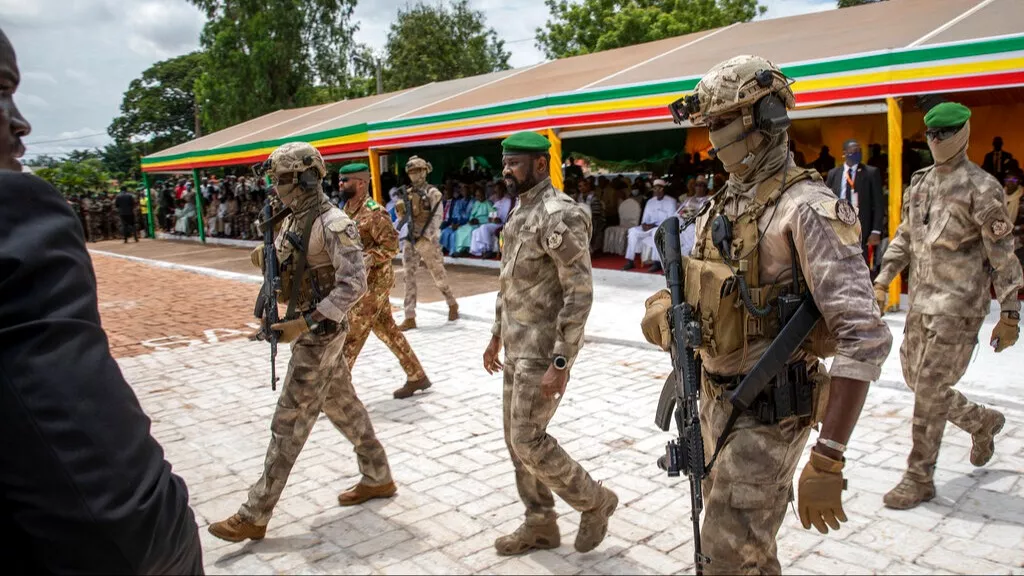
A state funeral was held on Thursday for Mali’s former defence minister, General Sadio Camara, a key architect of the military government’s security partnership with Russia.
He was killed during last weekend’s coordinated attacks by jihadist militants and their Tuareg separatist allies on military positions across the country, the largest in over a decade.
After two days of national mourning, a funeral was broadcast on state television and attended by junta leader Assimi Goita and top military officials.
The coffin was draped in the green, yellow, and red of the Malian flag while large portraits of the former defence minister were on display.
Camara played a key role in establishing Russia as the country’s main security partner following the coups that brought the military to power.
Analysts say his death, and the major setback endured by the army and its Russian mercenary allies, risk creating divisions within the junta and could lead it to reconsider its partnership with Moscow.
Camara was born in 1979 in Kati, the same garrison town near the capital Bamako where he was killed when a car bomb exploded outside his home on Saturday.
As a field officer, he was deployed to northern Mali in the late 2000s, amid a rise in rebellions by armed groups, some linked to Al-Qaeda.
After graduating from a military academy, he went abroad on several training assignments, including at a military academy in Russia.
Malians first became familiar with Camara when, as a colonel, he appeared on national television in August 2020 among a group of five officers who had overthrown President Ibrahim Boubacar Keita.
The officers accused Keita of being propped up by France and not doing enough to contain the rampant militant attacks in the country.
They pledged to provide more security.
Following the coup, the new junta turned to Russia as its new security partner, expelling French troops and United Nations peacekeepers.
Camara was one of the junta’s top officials and was considered the architect of Mali’s rapprochement with Russia in recent years.
He served as defence minister under both of Mali’s successive military governments — first following the 2020 coup and then reappointed after a second coup in May 2021 which brought Goïta to power.