West Africa: Ecowas Single Currency Agenda Takes Center Stage
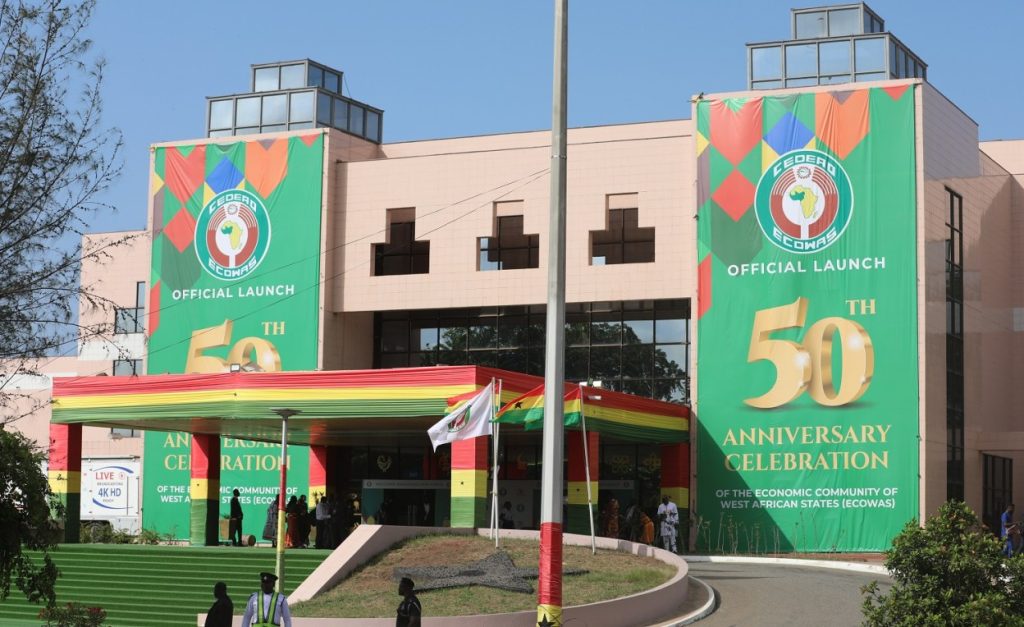
Liberia on Thursday, February 5, 2026, firmly positioned itself at the heart of regional economic integration as it hosted the 58th meeting of the West African Monetary Zone (WAMZ) Technical Committee in Monrovia this week.
The gathering, held at the Central Bank of Liberia, brought together high-level officials from across West Africa, including representatives of the ECOWAS Commission, the West African Monetary Institute (WAMI), West African Monetary Agency (WAMA), West African Institute for Financial and Economic Management (WAIFEM), and key international institutions.
Delivering the welcome statement on behalf of Minister of Finance and Development Planning Hon. Augustine Kpehe Ngafuan, Deputy Minister of Economic Management, Hon. Dehpue Y. Zuo emphasized Liberia’s commitment to regional cooperation and the critical goal of launching the ECOWAS single currency, the Eco, projected for 2027.
“Liberia is deeply honored to host this august gathering as we deliberate on critical issues surrounding the consolidation of the ECOWAS Monetary Cooperation Programme and the deepening of regional economic integration, including the much-anticipated launch of our single currency, the Eco,” Zuo said.
He noted that Liberia had initially planned to host this meeting in 2022 but had to delay due to the country’s bicentennial celebrations. “It is therefore a great pleasure that we are now able to welcome you physically to Monrovia, reaffirming Liberia’s enduring commitment to regional cooperation and solidarity,” he added.
Zuo provided an overview of Liberia’s recent economic performance, framing it as both a national achievement and a contribution to regional stability. He highlighted the country’s robust growth of 5.1% in 2025, exceeding projections and reflecting strong expansions in mining and panning activities, as well as gains in electricity and water services. Inflation, he noted, had fallen sharply to 4% by December 2025, the lowest in over two decades.
“These gains reflect prudent fiscal and monetary policies, the easing of global food and fuel prices, and investments in critical infrastructure,” Zuo explained. On fiscal performance, he highlighted record domestic revenue of US$847.7 million, surpassing the target by more than US$43 million. This achievement, he said, demonstrates Liberia’s capacity to finance its own development while reducing reliance on external donor support.
“Over the last two years, domestic revenue has risen by US$235.7 million, driven by stronger fiscal consolidation, digitalization of revenue systems, and enhanced compliance,” he said. Zuo also emphasized Liberia’s ARREST Agenda for Inclusive Development, an US$8.4 billion blueprint prioritizing Agriculture, Roads, Rule of Law, Education, Sanitation, and Tourism, which provides a clear pathway toward sustainable growth, poverty reduction, and shared prosperity.
In his remarks, Zuo also underlined Liberia’s adherence to ECOWAS Macroeconomic Convergence Criteria, noting that the country had met five key indicators by the end of 2025, including budget deficit control, exchange rate stability, debt-to-GDP ratio, reserve accumulation, and overall fiscal discipline. He stressed that these achievements reinforce Liberia’s policy credibility and position it as a model of resilience and economic reform in West Africa.
“Your careful examination of these items will be critical in shaping the next phase of our regional monetary and financial integration,” he said, emphasizing the importance of technical rigor and collective effort in advancing the Eco agenda.
Following the opening remarks, the Chairman of the WAMZ Technical Committee, Mr. Alhaji Abu Komeh, Acting Director, Ministry of Finance, Sierra Leone, welcomed delegates and praised Liberia for hosting the session. Komeh highlighted the region’s challenging global economic environment in 2025, marked by policy uncertainty, protectionist trade measures, and declining commodity prices. Despite these challenges, he noted that real GDP growth in the West African Monetary Zone was estimated at 5% in the first half of 2025, a marked improvement over 3.7% in 2024.
Komeh also highlighted Sierra Leone’s economic performance as a key benchmark for convergence, citing GDP growth of 4.4% in 2025, a sharp decline in inflation to 4.4% by December, and a reduced public debt-to-GDP ratio of 40.9%, down from 42.3% in 2024. He praised member states’ efforts to strengthen fiscal discipline, enhance domestic revenue mobilization, and improve public sector reforms.
“We will continue to implement medium-term revenue mobilization strategies, improve compliance, and modernize customs procedures to ensure efficiency in revenue administration and trade facilitation,” Komeh said. He underscored that these measures were critical for meeting convergence criteria and ensuring readiness for the Eco launch.
The Director-General of the West African Monetary Institute (WAMI), Dr. Abdulsalam Abidemi Sikiru, echoed these sentiments, congratulating Liberia for its peaceful 2025 presidential elections and the country’s role as a stabilizing influence in the region. “Our presence here provides not only an opportunity for productive relations, but also a chance to appreciate the history, resilience, and enduring optimism of the great nation whose commitment to regional solidarity continues to inspire us all,” he said.
Dr. Sikiru also emphasized the importance of technical preparation for the monetary union. “Key reports and policy papers, including the General Progress Report, Macroeconomic Development and Convergence Reports, and supervisory reports on banking and financial institutions, will form the basis of our deliberations during the days ahead,” he said. He thanked all member states, the ECOWAS Commission, WAMI, WAIFEM, and development partners for their ongoing collaboration and support.
Throughout the week, delegates discussed critical issues including remittance inflows, development financing, aid implications, legal frameworks for the monetary union, capital markets development, payments systems integration through PAPSS, and supervisory oversight of banking institutions. These discussions are central to ensuring that the Eco is launched on schedule and that the region benefits from deeper economic integration.
Liberia’s hosting of the WAMZ session also provided an opportunity to showcase the country’s economic resilience and reform agenda, which includes infrastructure investment, digitalization of public services, and fiscal discipline. Zuo emphasized that the success of the Eco depends not only on regional technical coordination but also on strong national foundations.
“Liberia stands ready to fully support the implementation of the decisions and recommendations that will emerge from your deliberations,” he said. “Through your technical rigor, policy creativity, and collective resolve, we can advance an agenda that promotes sustainable growth, macroeconomic stability, and shared prosperity across our region.”
The 58th WAMZ Technical Committee session in Monrovia is widely seen as a crucial milestone in the region’s drive toward the ECOWAS Monetary Union. By consolidating reforms, ensuring convergence, and fostering policy coordination among member states, the meeting represents a significant step toward the long-anticipated launch of the Eco in 2027.
As the region navigates complex global economic challenges, the technical committee’s deliberations underscore the importance of regional solidarity, sound macroeconomic policies, and inclusive development strategies. For Liberia, hosting this meeting highlights the country’s leadership role in shaping the future of West Africa’s monetary and economic landscape.
By the conclusion of the four-day session, delegates are expected to have reviewed and validated key reports, approved policy recommendations, and strengthened regional coordination mechanisms–laying the groundwork for a single currency that promises to enhance trade, investment, and economic stability across West Africa.
In a region where economic integration has long been a strategic goal, Liberia’s central role in hosting the WAMZ Technical Committee, combined with its recent macroeconomic achievements, signals both national resilience and regional commitment to the successful realization of the Eco and the broader vision of an “ECOWAS of the People.”
By Liberian Observer.