Zambia: ‘I Became Protective’ – A Cancer Survivor’s Fight to Fix Zambia’s Health System
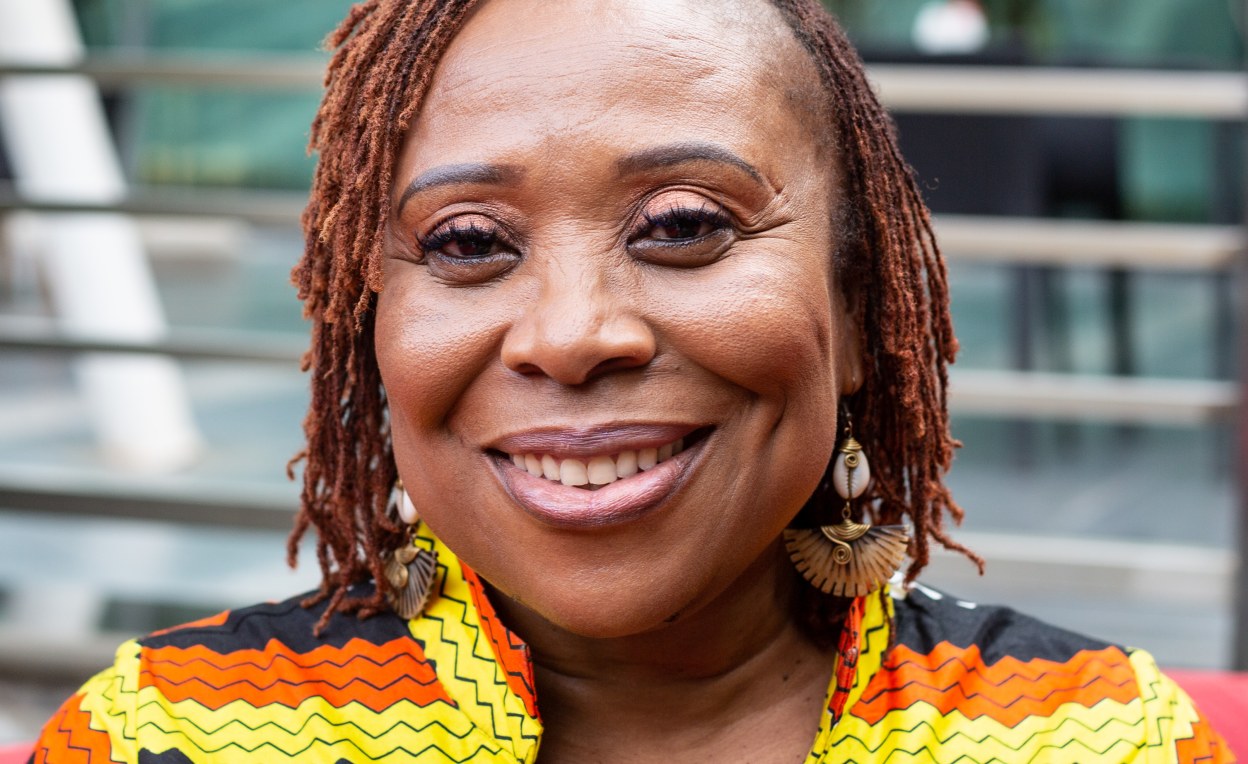
“Once you go through something as traumatic as a cancer diagnosis, you automatically become protective of the next person,” said Karen Nakawala, a Zambian broadcaster and cervical cancer survivor.
Nakawala knows that trauma firsthand. In 2019, her life changed when she was diagnosed with cervical cancer.
The diagnosis forced Nakawala to confront the disease she would later dedicate much of her life to talking about publicly. After treatment, she converted her experience into advocacy, determined to help other women recognize the importance of early screening and seeking care.
During her own treatment, she said she saw gaps throughout the healthcare system, with many women falling through the cracks, a realization that pushed her from patient to advocate. “I believe that cancer healthcare solutions should be culturally grounded given our diverse culture and should be rooted in those who live it,” she said.
Through her journey, she created Teal Sisters Foundation, an organization that has become a platform for women to access information, share their experiences, and seek support without judgment. Her private Facebook community, initially created as a safe space where women could speak openly about their health without being judged, has grown to more than 137,000 members. The women-only Facebook community aims to boost access to cervical cancer screening, prevention and treatment in Zambia.
Cancer is an increasing burden in Zambia.
The International Agency for Research on Cancer indicates that cervical cancer is still the most prevalent form of cancer in the country, with 4,730 estimated new cases in 2024. It was also the most prevalent form of cancer causing death and accounted for 2,769 cancer-related deaths in the same year. Breast cancer was the second most prevalent form of cancer among women, with 1,555 estimated new cases and 730 deaths.
Zambia has the third-highest burden of cervical cancer in the WHO African Region after Eswatini and Malawi
There is also a huge shortage of specialists in the country. Ministry of Health data shows that Zambia has just six oncologists serving a population of about 20 million people. To help close this gap, Zambia has, since 2006, invested in training nurses to play a greater role in cervical cancer prevention and care, including screening, treatment and vaccination.
Against this backdrop, the reopening of the radiotherapy and imaging unit at Lusaka’s Cancer Diseases Hospital takes on particular significance.
For years, patients needing radiotherapy faced a major gap in the country’s cancer-care system. Lusaka’s Cancer Diseases Hospital was shut down in 2020 for a major upgrade. Its closure left patients with fewer treatment options and forced them, in some cases, to seek care outside the country. Nearly 1,000 patients were left waiting for radiotherapy during the interruption, with about 600 referred to India for treatment, according to health authorities.
Nakawala described the six-year gap as “the worst period in Zambia’s cancer healthcare space.”
She said the country lost many women to breast and, in particular, cervical cancer, some diagnosed at early stages that could have been treated with good outcomes had radiotherapy been available. Those who could afford it traveled outside the country for treatment, she said, at “an astronomical out-of-pocket spend for families.” That gap, she said, has left a large backlog of patients now waiting for treatment, placing pressure on the newly reopened unit.
Zambia’s reopening of the radiotherapy and imaging cancer treatment facility at Lusaka’s Cancer Diseases Hospital pushed for better women’s cancer care in Africa. The facility was upgraded and commissioned by President Hakainde Hichilema in August, 2026. It can now treat up to 60 patients a day.
For patients, the restoration of the service means that specialised cancer treatment can once again be accessed closer to home, reducing the delays, travel and financial pressure associated with seeking care abroad. The hospital’s upgraded radiotherapy services include external beam radiotherapy, treatment planning and brachytherapy, supported by advanced imaging equipment.
“The first thing that comes to mind is the relief that patients and their caregivers feel,” said Nakawala. “It is always better to receive treatment close to home where you are surrounded by loved ones.”
Cancer treatment can be isolating, she said, and travelling abroad can deepen that isolation when patients cannot afford to take a caregiver with them. The reopening of the radiation unit therefore brings hope while potentially shortening treatment delays and reducing cancer mortality in the country.
Still, she cautioned that 60 patients a day “is not enough, but it is a positive step forward,” and that treatment capacity should grow once the unit is fully operational. However, the government must ensure that there is a solid plan for servicing and reinvesting so that we get uninterrupted optimal operation and services, which will be much to the benefit of both government and patients, she added.
Hichilema said that the installation of advanced cancer treatment equipment at the Cancer Diseases Hospital in Lusaka is a major step towards positioning Zambia as a regional centre for cancer diagnosis and treatment. He said Zambia is now the third country in Africa, after South Africa and Egypt, to have the equipment, which will allow patients to access specialised cancer treatment locally rather than travelling abroad, including to India.
The reopening comes at a critical time for Zambia, where the burden of cancer continues to place pressure on an already stretched health system. The burdens of breast cancer, cervical cancer, and HIV are overlapping among women in low- and middle-income countries.
Nakawala said the six-year closure exposed how centralized cancer treatment has been in Zambia. Even when cancer was caught early, she said, most deaths during that period were driven by lack of access and delayed treatment, worsened whenever machines broke down, and treatment was interrupted – sometimes never resuming. She pointed to several consequences of the resulting gaps in services: late-stage diagnosis, as patients often wait to seek care until pain and side effects become advanced; higher mortality tied to delayed or absent treatment; and a heavier financial burden on the country, since sending patients abroad for treatment costs more than treating them at home.
Breast cancer is the most common cancer in women in sub-Saharan Africa, with an estimated 129 000 new cases in 2020.
Yet survival remains far lower than in high-income countries, with five-year survival estimated at around or below 50% in the region. The burden is expected to grow sharply, with the number of women diagnosed each year projected to nearly double by 2040. The African Breast Cancer – Disparities in Outcomes (ABC-DO) study found that 50% to 90% of women in different African countries are diagnosed when the cancer has already reached an advanced stage, when treatment is more difficult, and the chances of cure are lower.
According to the study, inadequate treatment access and late diagnosis are responsible for the poor outcomes. Many women recognise changes in their breasts and seek medical help, but face long waits before receiving a diagnosis and starting treatment.
In the study, half of women in Zambia and Namibia and three-quarters in Uganda reported having breast symptoms for more than six months. Survival at three years was just 46% among women in Zambia and Uganda, compared with 58% among Black women in Namibia and South Africa and 36% in Nigeria. The study estimates that more than one-third of breast cancer deaths in sub-Saharan Africa could be prevented through earlier diagnosis and timely access to high-quality treatment.
Nakawala attributed the same regional shortfall in equipment behind those numbers. “38% of countries in sub-Saharan Africa have no radiotherapy equipment at all,” she said, “and 60-70% of women are diagnosed at a late stage.”
She said five in ten women diagnosed with breast cancer in sub-Saharan Africa will not survive five years, compared with nine in ten who survive in high-income countries. She listed stigma, lack of awareness and information, financial constraints, distance, and limited access to screening and timely treatment as the biggest barriers keeping women from care.
“In Zambia, cervical cancer is the number one killer of women, yet it is highly preventable. It is followed by breast cancer, which, if caught early, can be treated with good outcomes,” said Nakawala.
Breast cancer can also be treated with good outcomes when detected early.
Breast cancer, she said, is the leading cause of cancer-related deaths among women in Africa, with cases expected to double by 2040.
Zambia’s ambition to become a regional centre of excellence in cancer care will therefore require more than a single upgraded facility. She said decentralization is essential so the burden doesn’t fall entirely on the newly upgraded Lusaka unit. She added that two additional centres are under construction in Ndola to serve the northern region and in Livingstone to serve the south.
Beyond radiotherapy, Nakawala said government needs to work more closely with civil society organizations to raise awareness and share information with women, particularly given the gap created by years without radiation treatment. She called for greater investment in women’s health and more equitable access to care. She said that Zambia should align more closely with the World Health Organization’s Global Cancer Initiative to speed up early detection and diagnosis and improve survival.
She also pointed to the role of groups like the Africa Breast Cancer Council, of which she is a member, in helping governments strengthen advocacy, stakeholder engagement, and community efforts to reduce stigma by sharing best practices across member countries.
Nakawala argued that geography should not determine whether a woman survives cancer.
“No one single person should be disadvantaged because of their geographical location. We are all entitled to good healthcare services regardless of geography,” she said.
She said that when the world talks about universal healthcare, it must reach beyond urban areas to everyone, which is why decentralizing cancer care matters so much. For Zambia and the wider region, that means bringing cancer services closer to the people who need them through greater investment, training and decentralisation.
“Let us all be intentional when it comes to cancer,” Nakawala said. “Governments and international communities should support advocacy programmes which are centred on prevention and early diagnosis.”