Africa: Mombasa Declaration Unites 15 Countries in Fight Against Illegal Fishing
Mombasa, Kenya — As illegal, unreported and unregulated (IUU) fishing practices continue to deplete fish populations as well as contribute to human rights abuses at sea, the demand for transparency within the global fishing industry is growing. An estimated one in five fish consumed globally is linked to illegal fishing, a practice often associated with forced labour, human trafficking and environmental destruction. It is estimated that more than 120,000 fishers are currently trapped in situations of modern slavery at sea. At the heart of this crisis lies one fundamental problem: the fisheries sector suffers from a severe lack of transparency.
“Without knowing who is fishing and how, we cannot stop illegal fishing or the crimes linked to it.”
Against this backdrop, governments and conservation groups are championing new transparency measures, culminating in the launch of the Mombasa Declaration on Fisheries Transparency, which seeks to strengthen accountability and improve oversight across the seafood industry.
A coalition of 15 countries from Africa, Asia, the Caribbean, Europe and the Pacific has adopted the Mombasa Declaration, pledging to strengthen fisheries transparency and intensify efforts against illegal, unreported and unregulated (IUU) fishing.
The declaration calls for greater openness in fisheries management through improved collection and sharing of vessel information, enhanced access to fisheries data and stronger cooperation among governments. The initiative seeks to support implementation of the Global Charter for Fisheries Transparency, a framework of 10 policy principles designed to improve accountability and governance across the fishing sector.
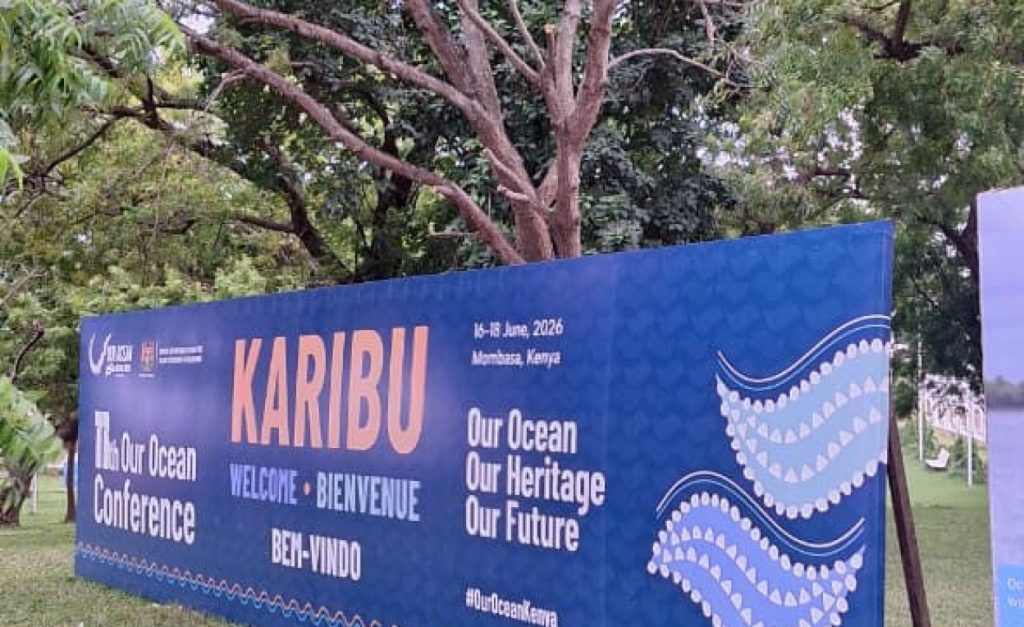
The declaration aligns with the conference theme, “Our Ocean, Our Heritage, Our Future.” It highlights the growing role of African coastal and island nations in shaping global ocean governance. It comes amid mounting concerns over the impact of IUU fishing on marine ecosystems, food security and the livelihoods of millions of people who depend on fisheries for income and nutrition.
Signatories include Belgium, Cameroon, Chile, the Republic of the Congo, the Dominican Republic, France on behalf of its overseas territories, The Gambia, Ghana, Guinea, Liberia, Panama, Papua New Guinea, Peru, Somalia and South Korea. Together, they have committed to advancing measures that improve transparency around vessel ownership, licensing and fishing activities, while strengthening oversight and enforcement.
Supporters of the declaration say greater transparency is essential to closing loopholes that enable illegal operators to evade detection. By improving information sharing, implementing stronger monitoring systems and encouraging regional cooperation, the initiative aims to help countries better protect fish stocks, safeguard coastal livelihoods and promote a more sustainable and equitable blue economy.
The adoption of the declaration also marks the beginning of a broader campaign to encourage additional countries to join the initiative ahead of the next Our Ocean Conference in 2027.
Ghana’s Minister for Fisheries and Aquaculture, Emilia Arthur, described fisheries as a cornerstone of Ghana’s economy and society, supporting nutrition, food security, livelihoods and national security. “In my country, our very existence depends on fish,” she said. “Over 60% of our animal protein comes from fish, and 10% of our population depends on the fisheries value chain for their livelihood.”
Arthur welcomed Ghana’s early adoption of the Mombasa Declaration, saying it offers a global platform for governments to unite in their efforts to strengthen transparency and cooperation in the fisheries sector.
“We continue to wage war on IUU fishing. We have not won yet due to the lack of transparency,” she said. “Those who operate in IUU fishing are highly coordinated and highly resourced.”
She said that illegal fishing thrives in environments where information is limited or inaccessible, allowing illicit actors to operate with impunity.
“We in Ghana are 100% committed to ensuring that we adhere fully to all the principles.”
Arthur said Ghana has already incorporated some of the Global Charter for Fisheries Transparency’s principles into the country’s Fisheries and Aquaculture Act 2025, including provisions on publishing fishing vessel licences and beneficial ownership information. Ghana has made progress in implementing the charter’s 10 transparency principles, with most measures partially implemented and controls on transshipment fully implemented.
She said that the country has partially implemented measures requiring unique identification numbers for fishing vessels, publishing vessel licences and sanctions, disclosing beneficial ownership information, preventing the use of flags of convenience, making vessel position data available, improving seafood traceability, ratifying international fisheries agreements, increasing public access to fisheries data and collecting information on the welfare of fishing crews.
She said the government would continue integrating the charter’s remaining principles to improve the accessibility, reliability and timeliness of fisheries information and strengthen overall fisheries management.
Arthur also credited support from organizations such as the Environmental Justice Foundation and the Fisheries Transparency Initiative, saying their collaboration had been instrumental in advancing transparency reforms in Ghana’s fisheries sector.
“We are not doing transparency for its own sake, we are doing it to achieve better social and environmental outcomes.”
“The global fishing industry is worth more than US$400 billion annually, yet it remains one of the least transparent sectors in the world,” said Ryan Orgera, the Director of the Coalition for Fisheries Transparency.
According to Orgera, overfishing is not only damaging marine ecosystems but also weakening climate resilience, undermining food security and threatening the livelihoods and cultures of coastal communities that depend on fisheries.
“Hidden vessel ownership, unregulated fleets, unreported catches, forced labour, human rights abuses and untraceable supply chains are all enabling illegal and destructive fishing practices,” he said.
“Today, countries have committed to prioritizing accountability, fair competition and the protection of workers and communities by signing the Mombasa Declaration,” Orgera said.
“The Mombasa Declaration is a call to action for coastal and flag states on fisheries transparency, with a particular focus on improving the collection and sharing of vessel information and increasing access to fisheries data,” he said.
Orgera said the declaration builds on the Global Charter for Fisheries Transparency, a framework of 10 principles designed to strengthen transparency and accountability in fisheries management. “Without transparency, we don’t have accountability, and without accountability, we do not have sustainability,” he said. “We are not pursuing transparency for its own sake. We are doing it to achieve better social and environmental outcomes.”