
East Africa fears second wave – of locust swarms
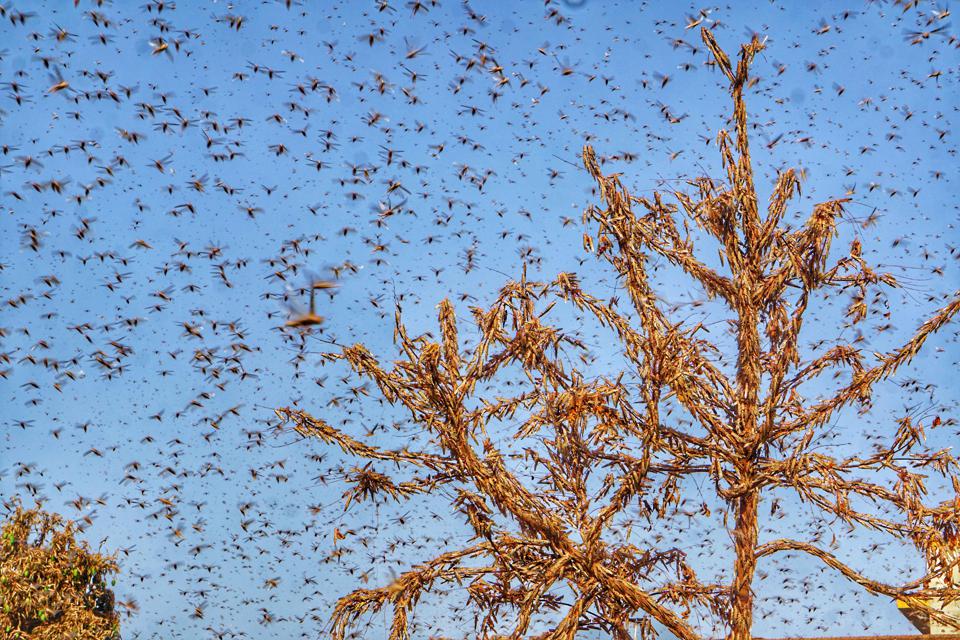
The UN says there have been good breeding conditions in eastern Ethiopia and Somalia, with Kenya also at risk.
And breeding underway on both sides of the Red Sea poses a new threat to Eritrea, Saudi Arabia and Yemen.
This year had already seen the worst East Africa invasion in 70 years.
“For Kenya, the threat is imminent, it could happen any time now,” Keith Cressman
“It could be as bad as what we’ve seen in the past year because the area of breeding ground in these countries is as big as 350,000 sq km (135,000 sq miles).”
How a single locust becomes a plague
On patrol with the locust hunters
How crops are devoured
Between January and August this year East Africa saw billions of the insects destroying crops across the region.
“We lost so much of our pastures and vegetation because of the locusts and as a result we are still losing a good number of our livestock,” said Gonjoba Guyo, a pastoralist in North Horr sub-country in northern Kenya.
“I have lost 14 goats, four cows and two camels because of the locust outbreak and now there is lots of fear that we may face similar or worse consequences.”
FAO officials said countries in the region were now much better prepared than for the last invasion
They say surveillance is high, and preparedness – such as spraying pesticides on the ground or from aeroplanes – is much better, with over one million acres of land treated for infestations in 10 countries.
But there are fears that communities might be overwhelmed if the swarms are really big.
So, how could the locusts breed again on such a threatening scale?
Favourable weather
Experts say central Somalia and eastern Ethiopia received higher than average rainfall in the rainy season from September and November.
That meant the ground saw significant generation and expansion of vegetation.
“That became a really good breeding ground for the locusts,” said Mr Cressman. “And these areas are really huge breeding areas.”
With these conditions, within a couple of months locusts move from single insects to acting as a part of a group.
This then leads to small bands of wingless hoppers and small swarms of winged adults.
According to a report by the FAO and the World Meteorological Organisation, desert locusts can multiply massively and within a year there can be 160,000 times as many as at the outset.