Nigeria: Special Report – How Poverty Is Pushing Plateau Youths, Children Into Hazardous Work
Deep inside the forest behind the New Government House, Jos, young men and teenagers descend into narrow, unfortified pits, digging through layers of soil in search of traces of tin.
Before the morning sun fully breaks over the hills of New Rayfield in Jos, the sound of shovels cutting through the reddish earth can be heard from a forest behind the New Government House.
Deep inside the forest, young men and teenagers descend into narrow pits, digging through layers of soil in search of traces of tin. Their clothes are covered in red mud. Piles of excavated earth rise around the makeshift mining site.
Among them are two brothers — Abdullahi Garba, 16, and Sule Garba, 14.
The boys, who live in Topp Rayfield, Jos, should ordinarily be preparing for school. Instead, they spend their days digging through the earth.
“We are doing this because we need money for our school fees,” Abdullahi told PREMIUM TIMES at the site. “We want to go back to school, but without money for the fees, it is difficult.”
His younger brother, Sule, works alongside him, helping to excavate and process the earth.
“The work is hard, but we need the money,” he said.
Their story captures a disturbing contradiction confronting Plateau State and other mineral-rich parts of Nigeria: children and young people are entering hazardous mining not necessarily because they want to become miners, but because poverty has narrowed their choices.
For Abdullahi and Sule, mining is a means of paying school fees.
For many other young people, it is replacing menial jobs that no longer provide enough income to meet basic needs.
And recent events in other parts of the country have shown just how deadly that choice can become.
A national warning from Niger
On 17 September, 37 people died in the custody of the Nigeria Security and Civil Defence Corps in Minna, Niger State, after they were arrested during enforcement operations against illegal mining.
The suspects had been arrested around the M.I. Wushishi and Lukoto areas of Minna on 15 and 16 September.
The circumstances surrounding the deaths remain under investigation.
The NSCDC initially said the detainees died following a suspected disease outbreak, while reports from survivors and others raised questions about the conditions in which the suspects were held.
The federal government has since ordered an investigation, while the Niger State NSCDC commandant and many other officials in the state were suspended pending its outcome.
The ages of the victims added another disturbing dimension to the incident.
Niger State Governor Mohammed Bago said they were aged between 14 and 18 years, according to reports.
That means some of those who died were children.
On Saturday, the federal government announced a 10-member independent committee to investigate the deaths and suspended 20 additional NSCDC officers.
The Federal Ministry of Solid Minerals Development also deployed mining and technical experts to assist in establishing what happened.
Taraba deadly pit collapse
The danger was brought into sharp focus again in neighbouring Taraba State on Thursday.
A mining pit collapsed at Mayo Kam community in Bali Local Government Area, trapping miners underground.
Initial reports said more than 20 people, including women and children, were feared trapped. Police later confirmed that five bodies had been recovered while rescue operations continued.
The incident came only days after the state had moved to disperse illegal miners from the site, according to police.
The state government has banned illegal mining activities through Order 6, while authorities have continued to push for more responsible mining practices.
The tragedies in Niger and Taraba have shifted attention beyond artisanal mining itself to the circumstances that are drawing young Nigerians into it.
In Plateau, that question is visible in the red earth of New Rayfield.
Mining for school fees
Abdullahi said he previously depended on menial jobs, but the income was insufficient to meet his needs and save enough for his education. Mining, he said, offered a chance to raise money more quickly.
“I was doing menial work before, but what I was getting was not enough,” he said in Hausa. “Here, if you are lucky, you can make something that will help you pay your school fees.”
His decision was not driven by a desire to abandon education. It was, he said, the opposite. Their accounts illustrate how economic hardship can turn education itself into a reason for children to enter hazardous work.
The brothers are not alone.
In parts of Plateau, artisanal mining remains an important source of livelihood for people with few alternatives, attracting young people who previously depended on casual labour, petty trading, and other poorly paid work.
The exact number of young people entering the sector is difficult to establish because much of the activity occurs informally and outside official employment records.
But the risks are increasingly difficult to ignore.
A miner, Tizhe Danminchika, who hails from Adamawa State, told PREMIUM TIMES that he operates under the licence of a locally registered mining company, although he is not the owner.
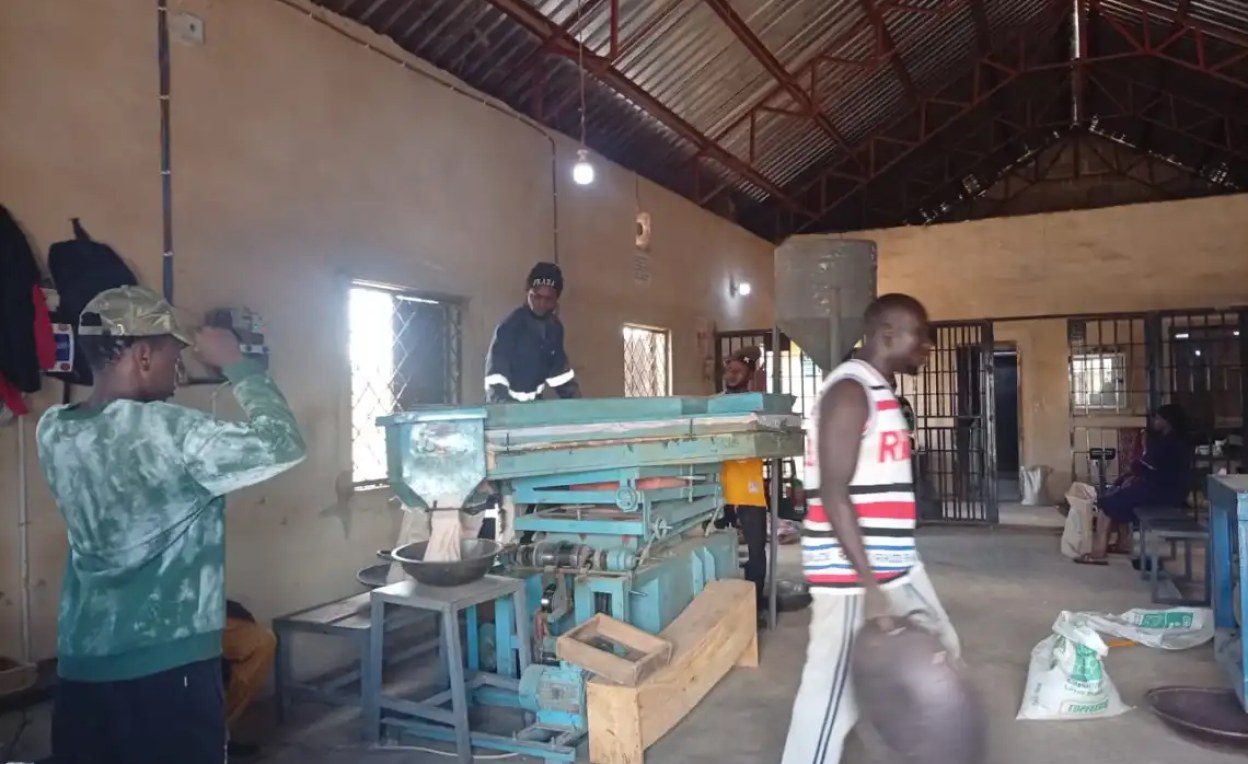
Mr Danminchika said he buys unprocessed mineral-bearing sand from local artisanal miners, most of whom are young people, and takes it to his processing site, where it is washed and processed before being sold, mainly to Chinese buyers.
“If business is good, I can make millions of naira in profit in a week,” he said.
Most of his workers are young men and women employed at different stages of the operation.
“Most young people are not bothered about the risks because the business has provided opportunities for thousands of young people across the state to fend for themselves and support their families,” Hajara Davou, who owns a mining mill in the Gura Topp area of Jos South Local Government Area, said.
Ms Davou said her own journey in the mining business began with picking washed mineral deposits from mining ponds and selling them.
“I later became an overseer. That means I engage young artisanal miners in manual excavation by providing for their feeding and other immediate needs. After they extract the minerals, I buy the products from them and deduct the money I have spent,” she said.
According to her, she eventually ventured into mineral processing due to the growing demand for processed products.
“I sourced a loan and established a mining mill,” she said.
Joseph Samuel, a 22-year-old mining mill operator and a diploma holder from Plateau State Polytechnic, said he receives ₦5,000 daily as a feeding allowance and earns between ₦50,000 and ₦150,000 weekly.
“No government job will give me that kind of pay,” he said.
Mining affecting class attendance
Education officials say the growing attraction of mining contributes to the number of children outside the classroom.
Speaking during an advocacy campaign on the state’s crisis of out-of-school children in July, the Executive Chairman of the Plateau State Universal Basic Education Board, Sunday Amuna, said communities must take responsibility for keeping children in school.
Mr Amuna specifically mentioned mining among the activities drawing school-age children away from education, warning that children who are not in school could become vulnerable to criminality and other social vices.
Also speaking at the event, Davou Terry, chairman of the Plateau State School-Based Management Committee, identified illegal mining, child labour and early marriage as major contributors to the state’s growing out-of-school population.
Mr Terry said the committee’s engagements across communities found that some children had entered mining activities at a very tender age.
The disclosure came as Plateau grapples with an out-of-school rate of 23.2 per cent, according to data presented at the campaign, while the dropout rate was reported to be above 28 per cent.
The warning followed concerns from the state’s environment authorities over the safety and social consequences of illegal mining.
In March, then Commissioner for Environment, Climate Change and Mineral Development, Peter Gwom, was involved in enforcement operations against illegal mining sites in parts of Jos.
Mr Gwom was later reassigned to Lands, Survey and Town Planning, while Joshua Laven Ubandoma was appointed Commissioner for Environment following Governor Caleb Mutfwang’s August 2026 cabinet reshuffle.
The successive warnings from the education and environment authorities underscore a growing concern beyond the environmental consequences of illegal mining: the impact of the industry on children and young people’s education and prospects.
A community leader in Plateau, Eric Davou, said efforts by communities to discourage young people from abandoning school for artisanal mining had produced limited results.
Mr Davou, a former councillor, said communities responded to the growing involvement of young people in artisanal mining and attacks on mining sites by criminal groups by establishing committees to raise awareness and a task force to monitor mining activities.
“Unfortunately, some members of the task force took advantage of the situation by extorting money or demanding part of the products extracted by the artisans. The enforcement did not work,” he said.
“We took the sensitisation to worship centres, but it could not yield the desired results,” he said.
A century-old industry, a new generation
Mining has shaped the history of Plateau for more than a century.
The discovery and exploitation of tin on the Jos Plateau transformed the region’s economy and attracted workers and businesses to the area.
But the industry also left behind an extensive network of abandoned mine workings.
The Nigeria Extractive Industries Transparency Initiative (NEITI) has cited estimates of 1,100 to 4,000 abandoned tin and columbite mines around Jos, along with more than 1,000 mine ponds scattered across abandoned minefields on the Jos Plateau.
Those abandoned fields remain an environmental and safety concern.
Research on tin and columbite mining on the Jos Plateau has documented land degradation and problems associated with abandoned and unreclaimed mining areas.
More recent studies have also highlighted subsidence in old mining fields around Kuru and Guratopp, underscoring the continuing physical dangers associated with the region’s mining legacy.
Yet the old mining landscape continues to attract a new generation.
For young people struggling to earn enough from casual work, the mineral deposits beneath Plateau’s soil represent an opportunity that can be difficult to ignore.
Danger beneath the soil
At the New Rayfield site, where Abdullahi and Sule work, there is little evidence of the safety infrastructure expected in regulated mining operations.
The boys work around deep excavations with basic tools. They enter or work close to unstable areas while removing earth. A collapse could bury them in seconds.
The danger is not theoretical.
In February, at least 37 miners died at an informal mining site in Kampani Zurak, Wase Local Government Area, after toxic gases accumulated underground, according to police reports.
In August, seven miners were reportedly killed when a mining pit collapsed at Kassa in Barkin Ladi Local Government Area.
Following the Kassa tragedy, the Minister of Solid Minerals Development, Dele Alake, said Plateau had more than 4,000 abandoned mining pits and warned against entering abandoned sites without appropriate authorisation and safety measures.
These incidents show that the risks confronting artisanal miners extend beyond the enforcement of illegal mining.
They include collapsing pits, toxic gases, unsafe shafts and abandoned mine workings.
For Abdullahi and Sule, however, the immediate need to raise money for school outweighs those dangers.
“We know it is dangerous,” Abdullahi said. “But we need to find a way to get money for school.”
Philip Jakpor, the founder and executive director of the Renevlyn Development Initiative (RDI), said the description of young people involved in small-scale mining as “illegal miners” could obscure the deeper issues behind their involvement.
The environmental expert and activist said poverty, unemployment and weak regulation in mining communities must be considered when discussing the presence of young people in the sector.
“First of all, we need to dissect the language going around because what we hear is that those young kids are illegal miners. It is not true. They are artisanal miners,” he said.
“There is a difference between illegal miners and artisanal miners. All the reports we are seeing in the media are saying that those are illegal miners or suspected illegal miners. They are not. They are artisanal miners, young people trying to eke out a living because they are living in poor conditions.”
Mr Jakpor said attention should also be directed at the owners of the mining sites where young people operate.
“The illegal miners are the owners of those mines. That is why we are asking the question: where were those kids mining? Who owns the place? We need to know the owner of the place,” he said.
Mr Jakpor said children involved in mining should be treated as vulnerable people rather than criminals.
“Some of them are as young as 15, 12, 13. They are not illegal miners. They are artisanal miners, small-scale miners, trying to survive. That is what they are,” he said.
When poverty competes with education
The International Labour Organisation has repeatedly identified poverty and household economic pressure among the factors driving children into work, including hazardous occupations.
Nigeria’s 2022 National Child Labour Survey documented millions of children engaged in child labour, with a significant proportion involved in hazardous work.
The national data do not provide a current count of children working in mining sites in Plateau.
But the presence of Abdullahi and Sule at the New Rayfield site shows how economic hardship can bring children into dangerous occupations even when their stated objective is to remain in school.
Mr Jakpor said the problem could not be addressed without confronting the poverty and unemployment that drive young people towards informal mining.
“You cannot stop it until you stop poverty. When you address poverty, that is when you stop these things,” he said.
“Addressing poverty, addressing unemployment, addressing the lack of development in mining host communities will address this kind of thing.”
Enforcement alone not enough
Observers say that authorities must enforce mining laws and protect communities from dangerous pits while creating realistic alternatives for young people whose livelihoods depend on informal work.
That means expanding access to education, skills acquisition, apprenticeships, and safer employment opportunities alongside stronger regulation of artisanal mining.
Community leaders also say enforcement mechanisms need greater accountability.
Mr Jakpor said the government must identify and hold accountable those who own or control mining sites where children are working.
“People are extracting and making mega billions from those communities. How come those communities do not have light, they don’t have roads, they don’t have schools, they don’t have medical facilities?” he asked.
Back at the New Rayfield site, the two brothers continue working. But they are not talking about becoming miners. They are talking about returning to school. But every day they spend in the pit exposes them to hazards that could make that return impossible.
By Premium Times.