
Somalis shocked by ‘damaging’ US decision to bar World Cup referee Omar Artan
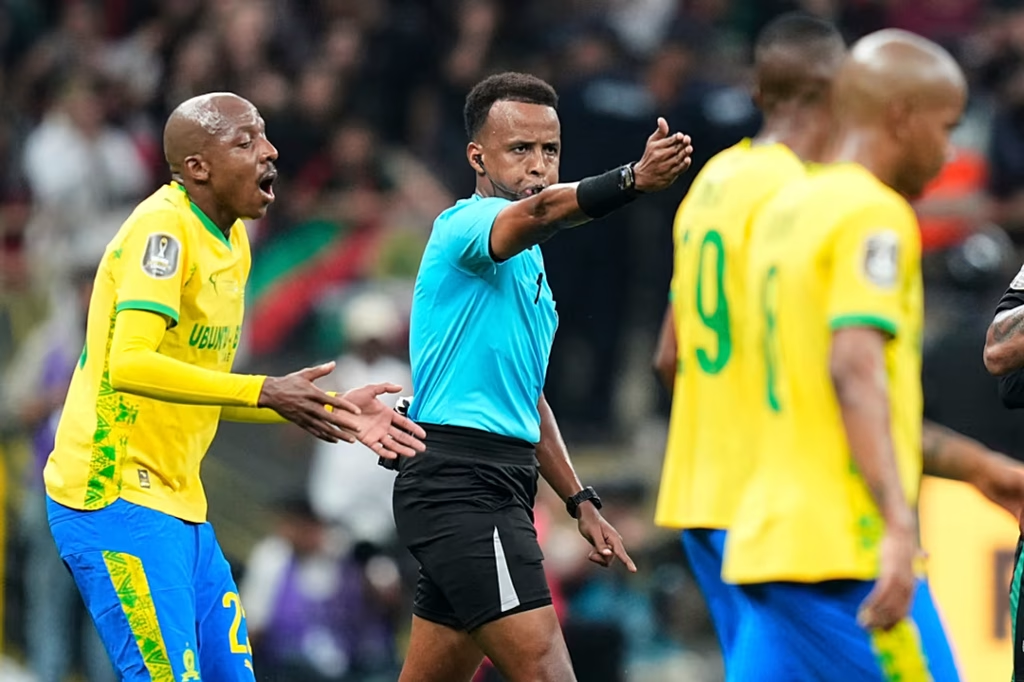
A decision by US customs officials last week to deny entry to Somali referee Omar Artan is being met with blowback from fans and officials alike.
Artan, who was named Africa’s best coach last year, was set to become the first Somali to officiate a a World Cup. Artan has said it was the “biggest dream of [his] life.”
The 34-year-old is one of Africa’s top referees and was named the continent’s best male referee in 2025.
He was denied entry at Miami International Airport on Saturday over “vetting concerns,” US Customs and Border Protection said in a statement without giving details of those concerns.
Artan was issued a visa to travel to the US last week, according to the Somalia Embassy in Kenya that processed it.
The move to deny a FIFA-appointed match official permission to enter a World Cup host country is highly unusual. Artan was due to meet up with other World Cup referees at their training base in Miami.
“The denial has now affected Omar Artan, a referee who earned the right to officiate at the highest levels of world football and truly deserved that opportunity,” said Ali Abdi Mohamed, President of the Somalia Football Federation.
“His refusal will definitely impact us because we wanted him to continue this work, for which he toiled so hard. It will also affect not only the football community but Somalis at large.”
Artan told The New York Times he was interviewed at Miami airport for 11 hours by border officials, who asked him why he’d traveled to the US and questioned him about Somali politics and the al-Shabab militant group that is fighting an insurgency against the government there.
He showed them FIFA documentation and photos from his refereeing career, he said. After the questioning, he was put in a holding cell and sent back on a plane to Istanbul, Turkey, from where he’d taken his connecting flight to the US.
“I think that they have a problem with my country,” Artan told The New York Times. It’s a feeling shared by residents of Somalia’s capital Mogadishu.
“I am very sorry for what happened to Omar, who became the best referee in Africa in 2025-2026,” said Mogadishu resident Abdinasir Idle.
“For him to be turned back to Somalia is very disappointing, and we are extremely sorry for that. Look, this is very damaging in every sense. This can damage his ambition, it can hurt or damage Somalis, it can hurt all Somali youth, and it can also damage our Somali government, the African community, and FIFA. Everyone really feels that this is strange.”
Immigration crackdown
Somalia is one of nearly 40 countries subjected to new travel restrictions under the Trump administration’s strict crackdown on immigration. That raised concerns that fans, players and officials from those countries — most of which are African — might be caught up in the crackdown and denied entry for the World Cup despite having valid visas.
The Somalia Youth and Sports Ministry said on Tuesday that its embassy in the US is trying to resolve the problem in time for Artan to still make the World Cup, which opens on Thursday.
Customs and Border Protection said in a statement Monday that Artan “underwent additional inspection” on arrival and called it “a routine part of CBP’s inspection process when officers need to verify information or determine admissibility.”
“Following inspection, the traveler, a referee for the FIFA World Cup, was determined to be inadmissible due to vetting concerns and was denied entry,” CBP said.
CBP said all travelers seeking entry into the US — including World Cup players, coaches and staff — were subject to CBP inspection and vetting.
“Admissibility determinations are made on a case-by-case basis using law enforcement, national security, and immigration information available at the time of inspection,” the CBP statement said. “CBP officers have the authority to question travelers, conduct inspections, and determine admissibility consistent with US law.”
FIFA said it was not involved in the immigration processes and was informed by US authorities that Artan’s “status will not be changed at present.”
It said Artan wouldn’t be able to train and officiate at the World Cup.
“In line with previous FIFA events, a host government ultimately determines who receives a visa and who is admitted into their country,” FIFA said.
Still, FIFA and its president Gianni Infantino built close ties to US President Donald Trump’s government as the US prepared to co-host with Mexico and Canada and had publicly stressed how that would help the World Cup run smoothly.
Infantino did not immediately comment on the issue, while FIFA released a statement on behalf of Artan.
“Despite the circumstances, I am in a positive mood and I am focused on the next challenges in my refereeing career,” Artan said in the statement.
Artan was praised as one of Africa’s best referees and was the ref for the decisive leg of the African Champions League final last month — Africa’s biggest club soccer game.